 By
By 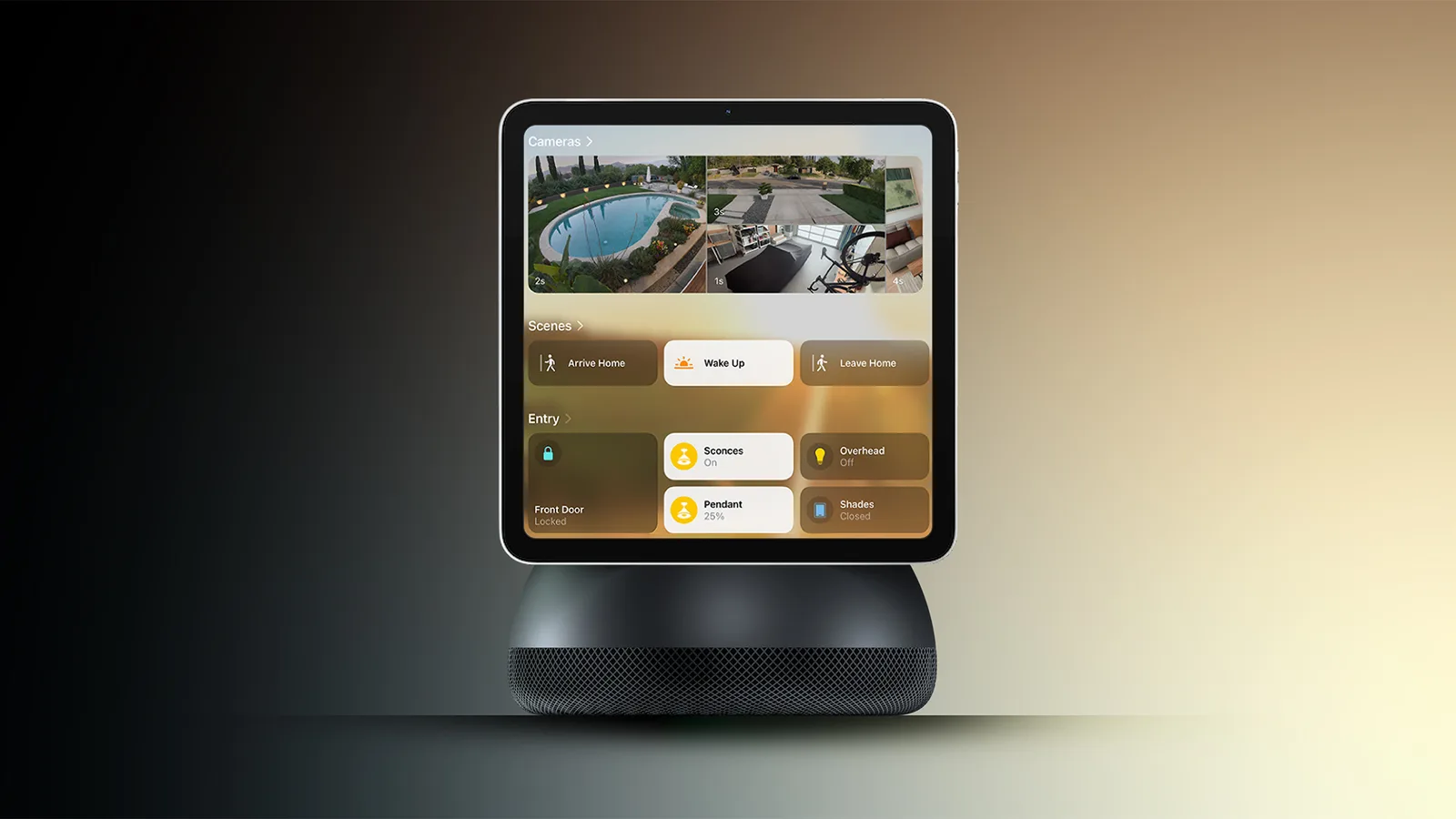
Apple’s long-rumored smart home hub could feature an iMac G4-inspired design, a six-inch display, and software tailored to different members of a household, according to Bloomberg’s Mark Gurman. Apple is also reportedly developing a wall-mounted version of the device.
The hub is expected to serve as a central control point for smart home accessories, video calls, intercom messages, music, photos, recipes, and other everyday information. Apple has not announced the product, so its design, features, and release plans remain unconfirmed.
iMac G4-inspired tabletop design
The standard model reportedly has a square display roughly six inches across, surrounded by a narrow black bezel. It is said to be about as thick as an iPhone, with rounded corners and no physical power or volume controls.
The screen sits above a circular metal base through a polished metal arm. The base includes several rings of perforated openings for the speakers and has a rubberized underside to keep the device stable on a table. Users would be able to tilt the display forward or backward manually.
This arrangement is reminiscent of Apple’s 2002 iMac G4, which placed a flat display above a rounded half-dome base. The reported hub would use Apple’s familiar gray aluminum finish and connect to power through USB-C. It would not include a battery, meaning it would need to remain plugged in.
Wall-mounted version and household features
Apple is also said to be working on a wall-mounted model, identified by the code name J491. Instead of a round tabletop base, this version reportedly uses a thin, square base positioned beneath the screen. The base would contain the microphones and speakers while sitting flat against the wall, with the device still relying on a USB-C power connection.
Apple’s broader vision reportedly involves placing multiple hubs around a home. The devices could control connected accessories, show photo slideshows, play audio, support FaceTime calls, and send intercom-style messages between rooms. In a kitchen, the hub could display videos or find recipes using voice commands.
A front-facing FaceTime camera would support video calls and help identify people. The system could use voice and facial recognition to tailor information and responses to the person interacting with the device. A visitor mode would reportedly prevent guests from seeing personal content.
Personalized interface with Apple-style apps
The facial recognition system is said to be less reliable than Face ID. Users could instead confirm their identity with an iPhone, which would also act as a fallback when the hub cannot identify someone correctly. In dark environments, a Mac-style Edge Light feature could illuminate the area around the display to assist recognition.
The interface reportedly combines elements from the Apple Watch, Apple TV, and iPad. It could include iPhone-style widgets, customizable wallpapers, rearrangeable apps, clock displays, and photo-focused screens. Users would reportedly swipe up from a clock or slideshow to open the app launcher.
Expected apps include Calendar, Messages, Photos, FaceTime, Notes, Reminders, Music, and Podcasts. Apps may use an Apple Watch-style launcher while opening into iPad-like layouts. Messages, for example, could display conversations in a two-panel interface with the thread list on one side and the selected conversation on the other.


