By
By 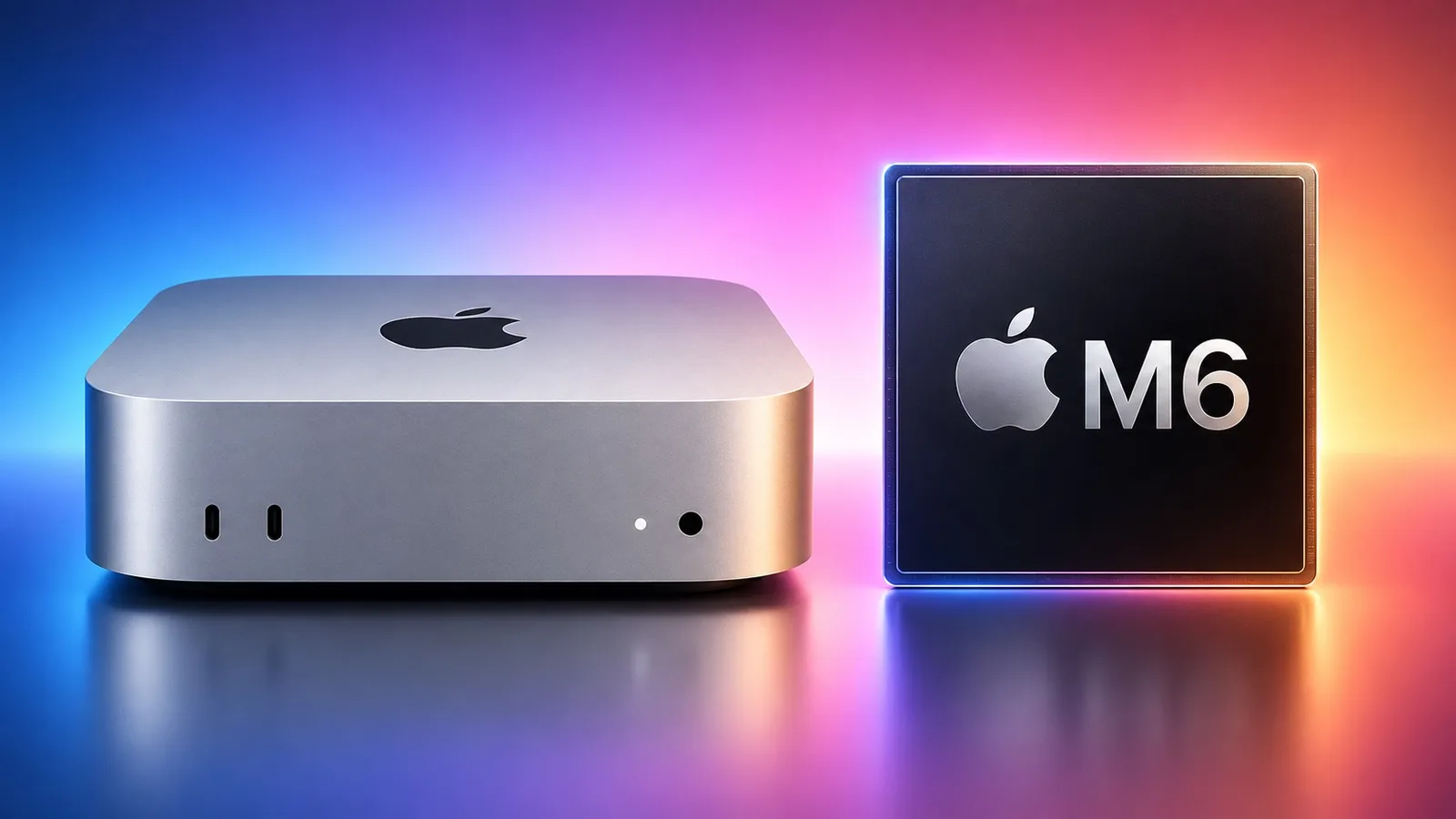
An early, unverified benchmark for Apple's upcoming M6 chip has appeared in the Geekbench 7 database, giving a first look at the performance of the company's 2-nanometer processor. The new Mac mini is expected to be the first product to ship with the chip when it launches next week.
What the M6 benchmark shows
The single leaked result lists a single-core CPU score of 4,071 and a multi-core CPU score of 22,783. For comparison, the M5 chip averages a single-core score of 3,641 and a multi-core score of 17,948, based on results from the 14-inch MacBook Pro.
If the figure is accurate, the M6 delivers roughly 12% faster single-core performance and about 27% faster multi-core performance than the M5. The two chips are measured in different machines, but Apple's silicon typically performs similarly across form factors.
Fastest single-threaded score in the database
Apple has said the M6 offers the world's fastest single-threaded CPU performance. The leaked 4,071 single-core figure supports that claim, topping every other Mac and PC in the Geekbench 7 database. That includes the M5 Max at 3,731 and Qualcomm's Snapdragon X2 Elite Extreme at 3,396.
The multi-core gain also lines up with Apple's own marketing. The company advertised up to 1.2 times faster multi-threaded performance, and a 27% improvement is broadly consistent with that figure. Measured against the original M1, the M6 is more than 2.5 times faster in multi-core workloads.
Where the M6 sits in the lineup
As a base chip, the M6 still trails Apple's higher-end silicon in multi-core performance. Here is roughly how it compares:
- M3 Ultra: 39,059
- M5 Max: 35,119
- M5 Pro: 33,593
- M4 Max: 29,047
- M4 Pro: 24,894
- M6: 22,783
- M5: 17,948
- M4: 15,477
M5 Ultra scores have not yet surfaced, and GPU results for the M6 are still awaited in the Geekbench 7 database.
When the new Macs arrive
Apple's new Mac mini will be offered with M6 and M5 Pro chips, while a refreshed Mac Studio moves to M5 Max and M5 Ultra options. Both are set to launch on Tuesday, September 22.
As with all pre-release leaks, the numbers should be treated cautiously. A single benchmark can be affected by thermal conditions or configuration, and Apple has not confirmed the result. Still, the early data suggests the shift to a 2nm process is delivering meaningful gains for everyday, single-threaded tasks where clock speed matters most.