By
By 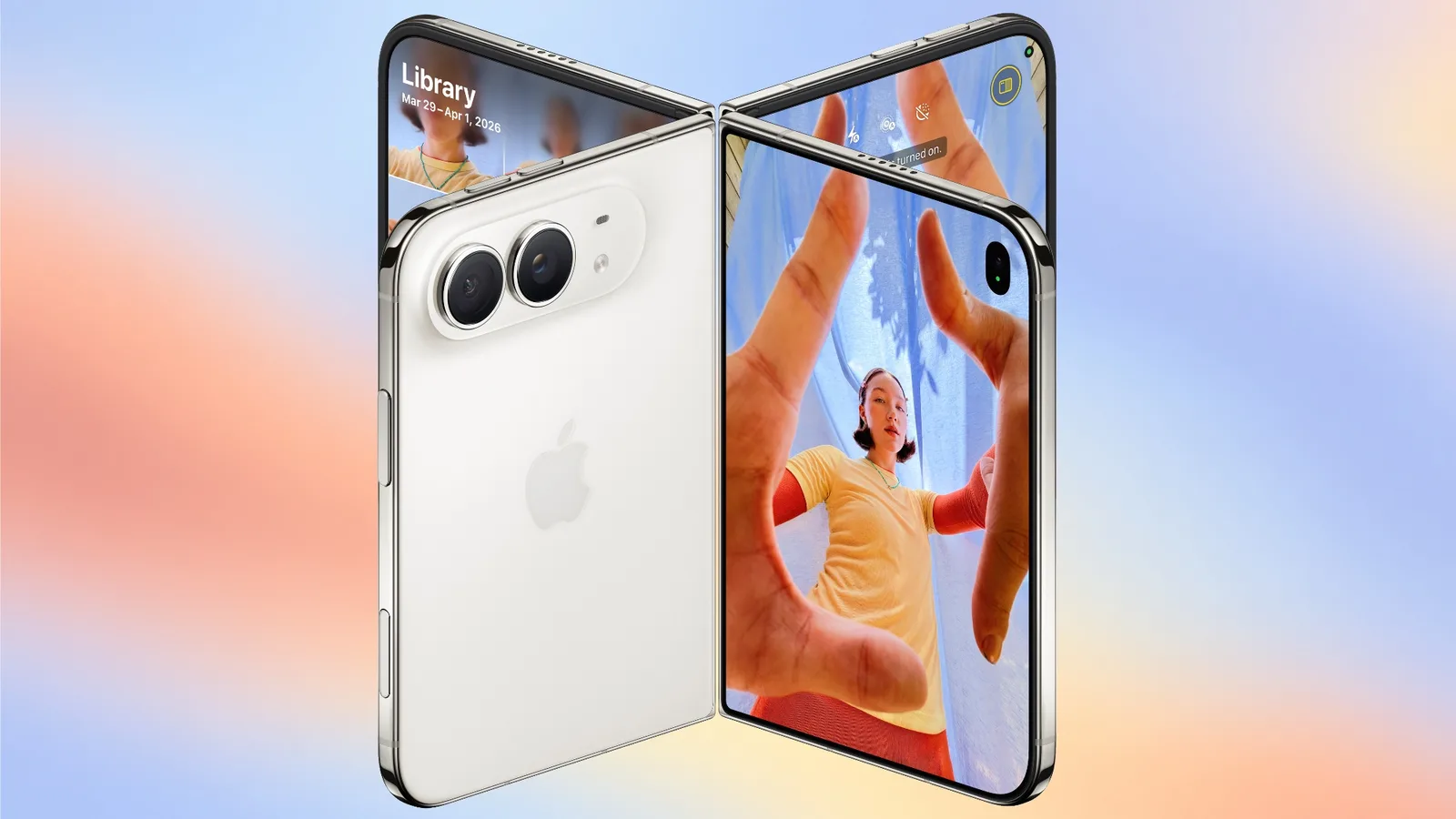
Apple's foldable iPhone Duo pairs a dual-display design with camera software built specifically for a phone that bends. The company is adding several features unique to the device, while its two-lens hardware sits closer to the standard iPhone 17 than the Pro line. The iPhone Duo goes up for pre-order on October 16 and launches on October 23, starting at $1,999.
Camera tricks made for a folding screen
Because the Duo has both an inner and an outer display, Apple built Camera app features that a slab phone can't match:
- Smart Take uses AI to detect when everyone in a group shot is ready, so the owner can prop the half-folded phone up, step into frame, and let it fire without a timer.
- Kid Cue plays small Peanuts animations to encourage children to look at the lens.
- Duo Preview shows a live preview on both screens, letting the subject see and adjust their pose.
- Duo FaceTime lets a nearby person join a call on the outer display while the owner uses the inner one, avoiding crowding around a single screen. Apple notes this is separate from Dual Capture, which records with front and rear cameras at once.
The folding hinge doubles as a built-in tripod and stand. The Duo can stand on its own for FaceTime, video recording and long exposures, and it can shoot selfies with the higher-quality 48MP rear camera while the outer display acts as a viewfinder.
What the camera hardware offers
The iPhone Duo carries a "Dual Fusion" two-camera system with a 48MP Main sensor. It largely matches the iPhone 17, delivering 26mm 24MP images by default and 12MP 2x shots at 52mm. There's also a 48MP Ultra Wide with a 13mm focal length and macro support.
Without a dedicated telephoto lens, the Duo tops out at 2x optical-quality zoom, 2x optical zoom out, and up to 10x digital zoom for stills. It includes sensor-shift optical image stabilization, though not the second-generation version found in Pro models, and it does not support spatial photos or ProRAW.
Video and shooting features
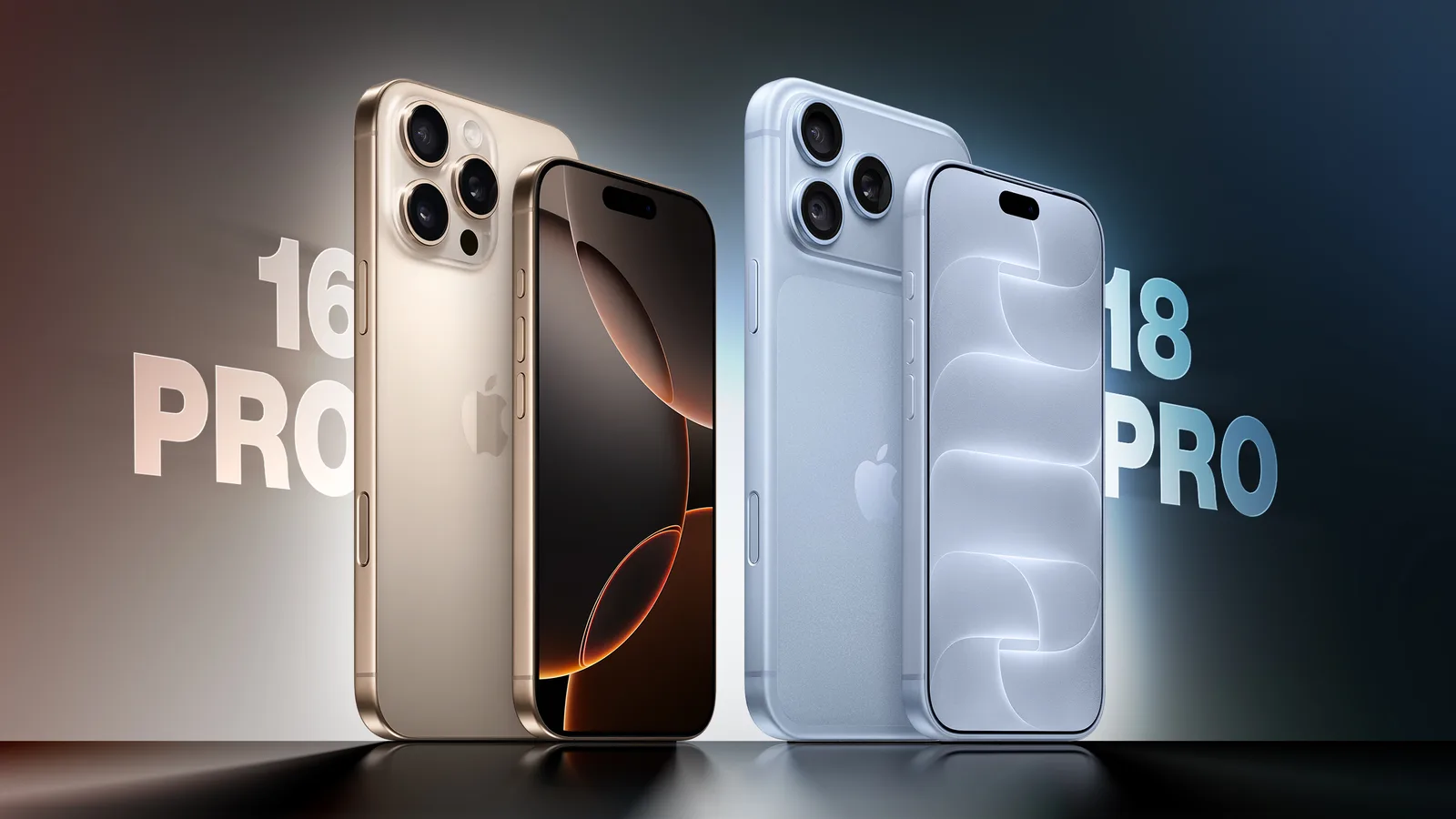
The Duo shares some newer tools with the iPhone 18 Pro. Smart focus tracking uses AI to keep a subject sharp and re-acquire it if the person leaves and returns to the frame. The phone records 4K Dolby Vision video at up to 120 fps, and Cinematic mode at up to 60 fps, with the ability—new to these models—to apply Cinematic effects after capture. Apple also cites improved low-light video at 1080p.
Time-lapse recording with stabilization up to 4K Dolby Vision is another shared addition, and Apple says it's especially handy on the Duo since the phone can stand on its own. The latest Photographic Styles, including texture and grain parameters, are supported.
On the front, the outer selfie camera is 12MP rather than the 18MP unit in the iPhone 17 and 18 Pro, while the inner display houses a 1080p under-display FaceTime camera.
The Pro features it leaves out
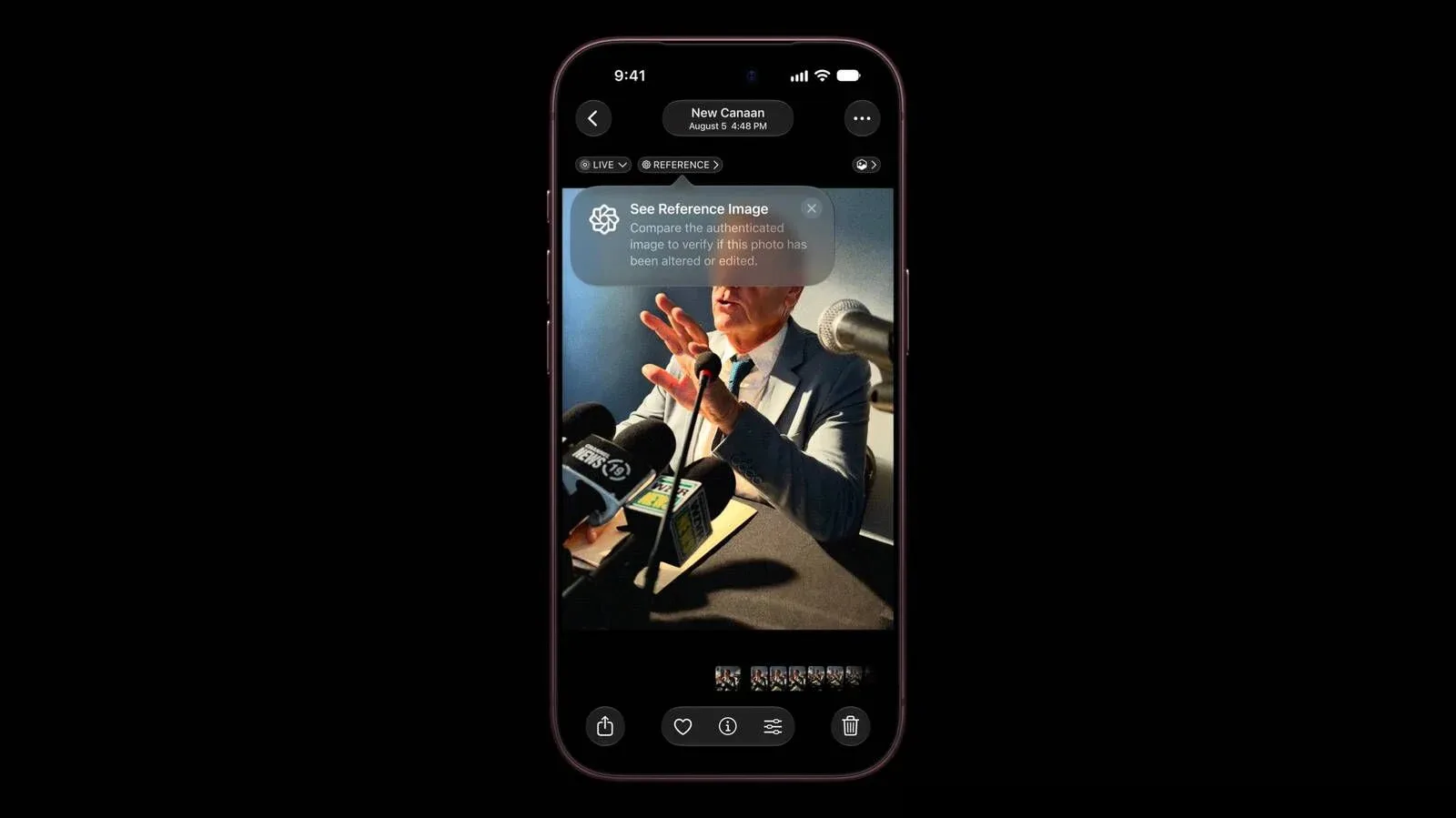
Compared with the iPhone 18 Pro and Pro Max, the Duo's system is more basic. It lacks a telephoto lens, Pro Controls, Apple Reference Image, variable aperture, second-generation sensor-shift stabilization, adaptive True Tone flash, spatial photo and video capture, ProRAW, ProRes, ProRes RAW, Genlock, Apple Log 2 recording, and the studio-quality four-mic array.
The trade-off is clear: buyers gain a folding form factor and screen-driven shooting tricks, but give up the deep imaging toolkit reserved for Apple's Pro models—at a starting price of $1,999.