By
By 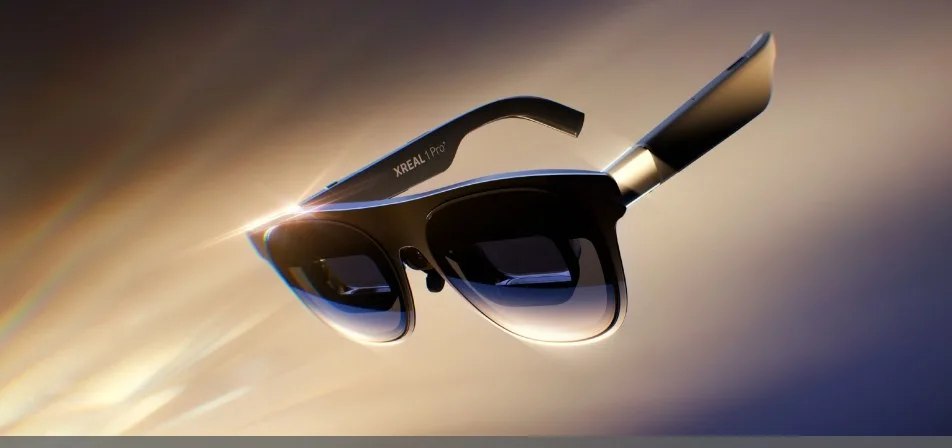
Xreal has launched the 1 Pro+, a new pair of augmented-reality glasses that increases peak brightness to 1,200 nits while keeping the same $599 starting price as the Xreal 1 Pro. The glasses are available from Xreal’s online store and partner retailers starting today.
The biggest change is the display performance. The 1 Pro+ reaches 1,200 nits, compared with 700 nits on its predecessor, which should make virtual screens easier to see in brighter surroundings. Xreal also says the glasses can convert 2D content to 3D at up to 60 frames per second, doubling the previous model’s 30fps capability.
Xreal 1 Pro+ display specifications
The 1 Pro+ retains the same 0.55-inch Sony Micro-OLED panels used in the earlier model. Each display has a 1,920 x 1,200 resolution and supports a 120Hz refresh rate. Xreal is also promoting a new AI HDR feature intended to improve the appearance of supported visual content.
The glasses provide a 57-degree field of view and can create virtual screens ranging from 34 inches to 556 inches in size. Native 3DoF, or three degrees of freedom, support is included for spatial viewing, allowing virtual content to remain positioned as the wearer moves their head.
Spatial computing hardware and comfort
Processing is handled by Xreal’s X1 spatial computing chip, which the company says delivers 3ms M2P latency. That latency is designed to help keep the displayed image aligned with the connected device’s output during use.
Xreal has also revised the nose pad. The updated design has a broader contact area, with the company positioning it as a more stable and comfortable option for extended sessions. The overall connection method remains unchanged: the glasses use USB-C and require a device with DisplayPort Alt Mode.
Price and availability
The Xreal 1 Pro+ starts at $599, matching the launch price of the Xreal 1 Pro despite the display and processing-related updates. Buyers can order the glasses through Xreal’s official online store or participating retailers.
For users who already connect laptops, phones or other compatible devices through USB-C, the new model’s brighter panel and faster 2D-to-3D conversion are its main upgrades. The requirement for DisplayPort Alt Mode remains important, as not every USB-C device supports video output.