By
By 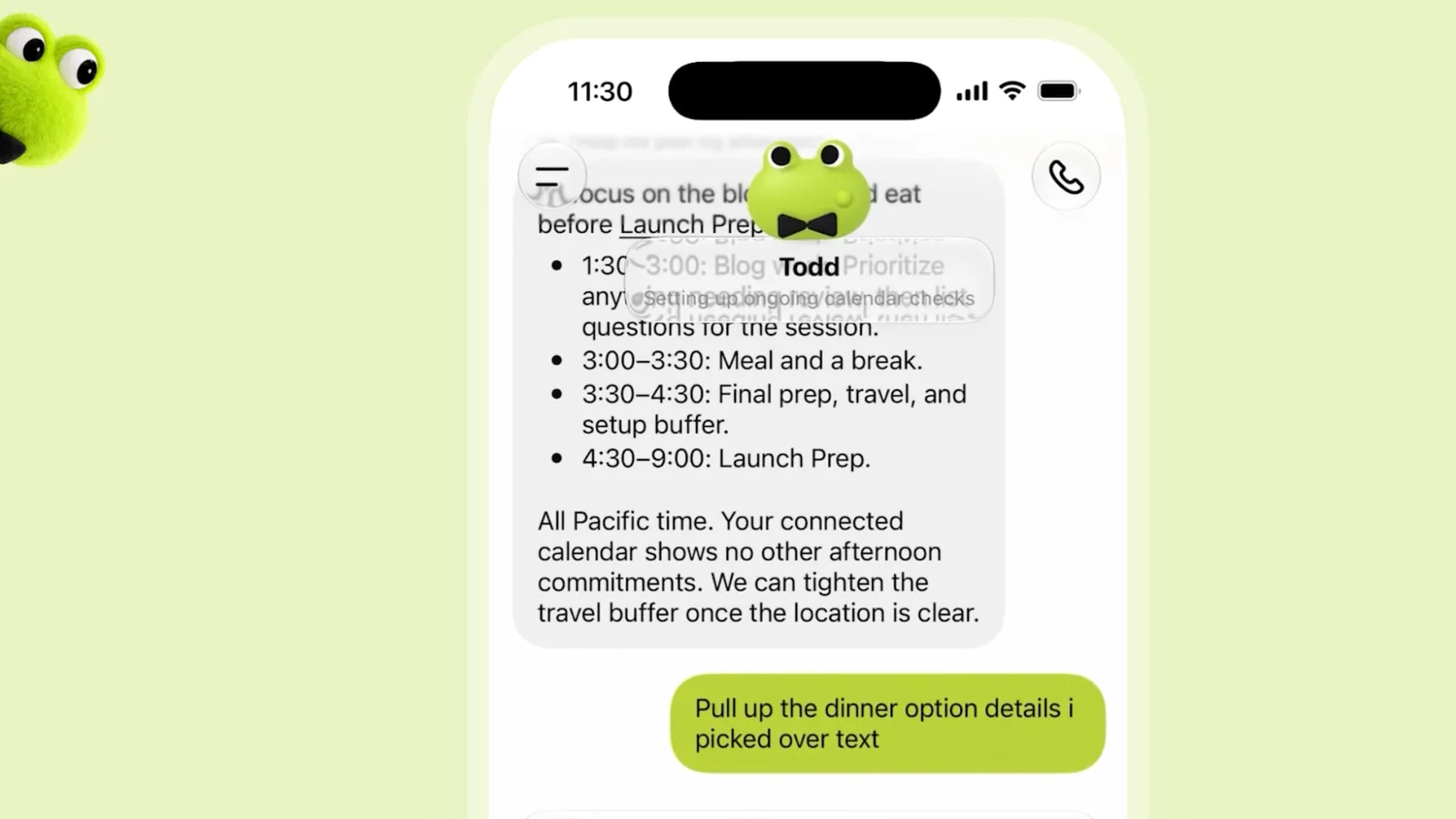
OpenAI has launched Dots, a new class of always-on agents designed to work on users’ goals continuously. Built on the GPT-6 Astra model, Dots can use a cloud computer and web browser, learn from feedback, and connect to more than 4,000 apps.
The company says Dots are intended to handle tasks over time rather than only respond to individual prompts. Users can ask questions, explore ideas, provide feedback, or speak with a Dot through a voice call. The agent is designed to learn a user’s preferences, working style, and expectations as they collaborate.
How OpenAI Dots work
A Dot can retain context across supported communication channels, allowing users to interact with it through ChatGPT as well as services such as Slack and Microsoft Teams. OpenAI also plans to add text-based access.
Dots can conduct what OpenAI calls “proactive research” on projects in the background. That means an agent may continue working on an assigned goal without requiring the user to keep the conversation open. OpenAI says users can also define custom rules that specify which actions require approval.
The agents follow ChatGPT’s existing permissions, giving users a way to control what a Dot can access and do. OpenAI has not said in the announcement how every supported app or task will behave, so the practical scope of those permissions may vary by setup.
Availability and pricing
Users can create and name a “primary dot” starting today. OpenAI says teams of Dots will arrive later, potentially allowing several agents to work together on broader projects.
Dots are rolling out in select markets to customers on Pro, Business Premium, and Enterprise plans. Other users are expected to receive access soon. Eligible customers receive one Dot at no additional cost.
Conversations with a Dot do not count toward ChatGPT usage limits, although the tasks it performs use the allowances included with the user’s plan. Setup is available through the ChatGPT desktop app, while the resulting Dot can later be accessed through the mobile app.
OpenAI adds a new model
Alongside Dots, OpenAI introduced GPT-6.1 Sol. The company describes it as a major update to GPT-6 Sol, with improvements focused on agentic coding, computer use, and professional work.
Dots place OpenAI’s latest model capabilities into a persistent assistant format. Instead of waiting for a prompt each time, the agents are intended to maintain context, operate across workplace tools, and continue research in the background. That approach could make approval controls and app permissions especially important as the service expands to more users.