By
By 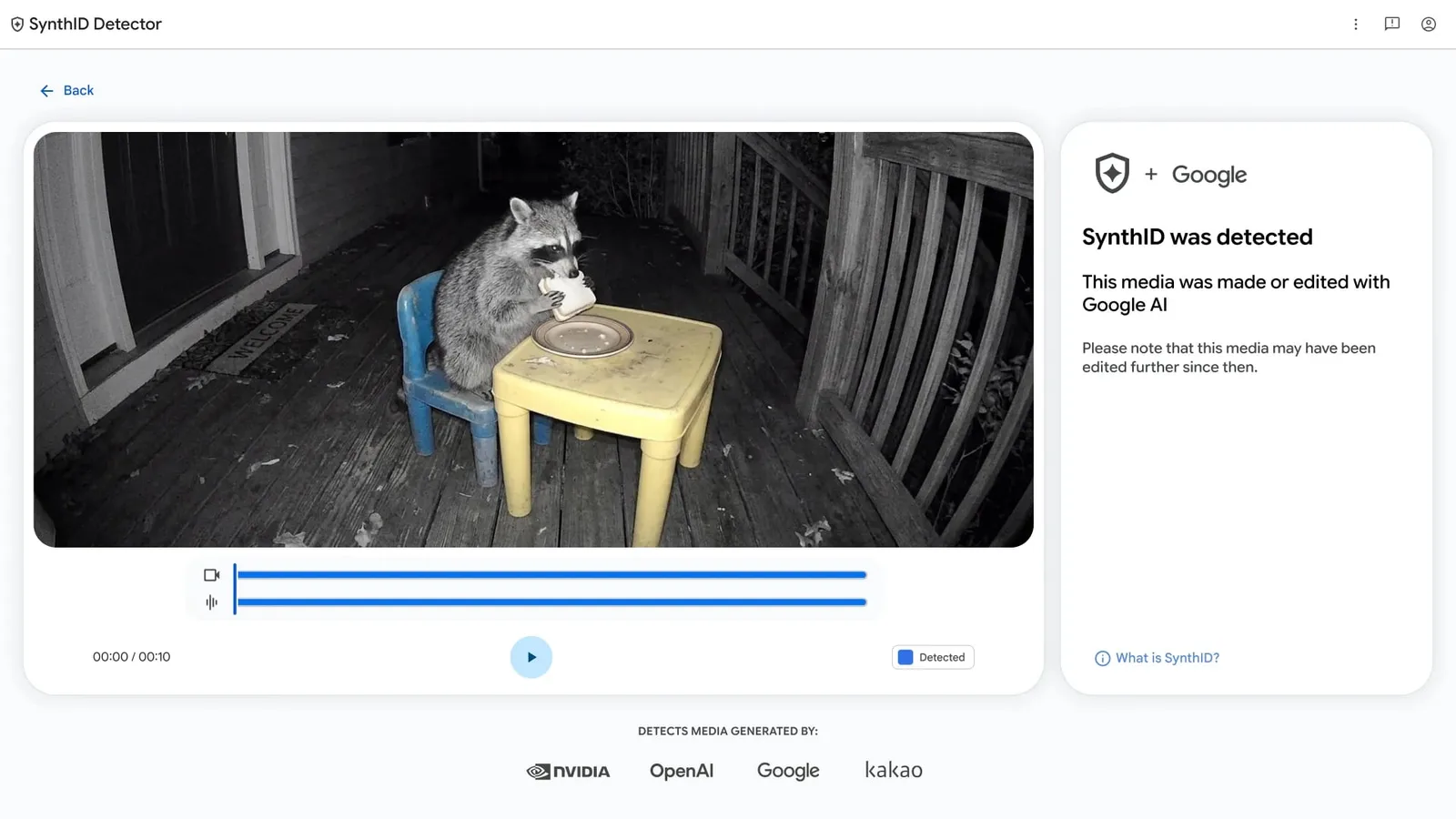
Google is making its SynthID Detector available to everyone worldwide in English, giving users a way to check whether a photo, video, or audio file contains the company’s invisible watermark for AI-generated content. The web-based tool requires users to sign in before uploading media for analysis.
SynthID Detector was initially offered to members of the media last year. Its broader release expands access to a system designed to identify content created with supported generative AI tools, although Google says it has important limitations.
How Google’s SynthID Detector works
SynthID embeds a digital watermark into AI-generated content. The watermark is designed to remain invisible to people, while Google’s detector can scan uploaded files for its presence. Users can submit photos, videos, or audio through the SynthID Detector website.
A positive result indicates that the file contains a SynthID watermark associated with supported AI-generated media. The technology is intended to provide a provenance signal without visibly changing the content for viewers or listeners.
The tool is not a universal AI detector
Google says SynthID Detector cannot distinguish between content created entirely by AI and media that was edited using AI. It also does not identify every piece of synthetic media on the internet. The system can only detect content that uses SynthID technology.
That distinction means an absence of a SynthID watermark should not be treated as proof that a file was made by a person. Media created with other watermarking systems, or without any watermark, may not be identified by the website.
Which AI platforms support SynthID?
Google says SynthID Detector can identify media generated using AI systems from Google, OpenAI, Nvidia, and Kakao. Apple also plans to support SynthID later this year, which could expand the range of content the service can check.
The companies’ support does not make the detector a general-purpose authenticity service. Its results depend on whether the relevant content-generation system applied SynthID and whether the watermark remains detectable in the uploaded file.
SynthID checks are also built into Google products
Users who do not want to visit the standalone detector can already access SynthID checks through Google Search, Gemini, and Chrome. Google presents those integrations as an alternative to uploading files directly to the SynthID Detector website.
The wider rollout gives researchers, publishers, and everyday users another way to investigate the origin of digital media. However, Google’s own description of the system makes clear that watermark detection is one part of content verification rather than a definitive test for whether media was created or edited by AI.