 By
By 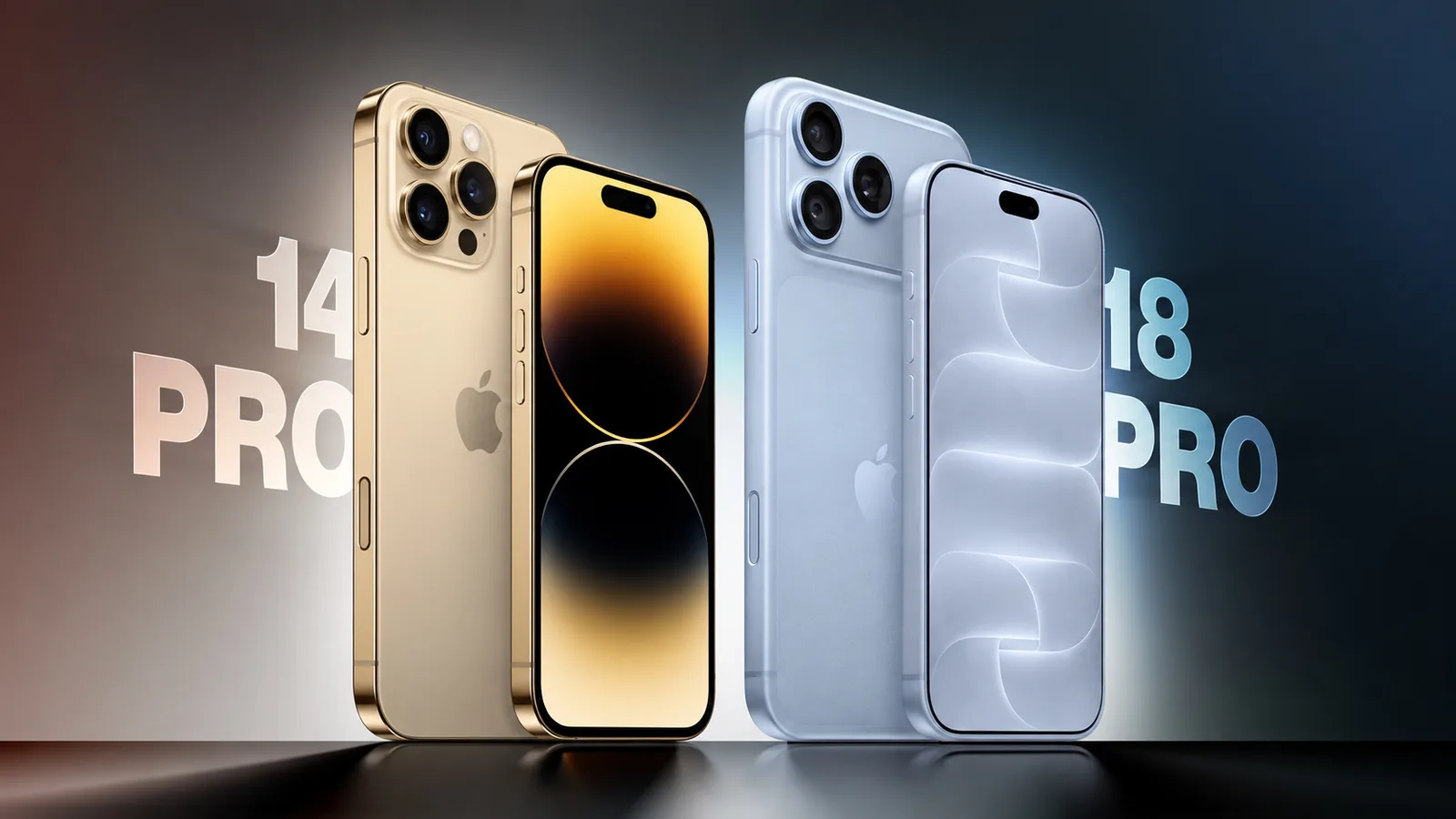
Apple’s iPhone 18 Pro and iPhone 18 Pro Max represent a major upgrade over the four-year-old iPhone 14 Pro lineup. The newer models add larger and brighter displays, a redesigned body, substantially longer battery life, faster charging, USB-C, more capable cameras, and support for Apple Intelligence.
The upgrade comes at a higher starting price. The iPhone 18 Pro begins at $1,199 with 256GB of storage, while the iPhone 18 Pro Max starts at $1,299. The iPhone 14 Pro launched at $999 and the iPhone 14 Pro Max at $1,099, but those models started with only 128GB.
A larger, brighter, redesigned iPhone
The iPhone 18 Pro grows from 6.1 inches to 6.3 inches, while the Pro Max increases from 6.7 inches to 6.9 inches. Apple has also reduced the display borders, raised outdoor peak brightness from 2,000 to 3,000 nits, and added a coating designed to reduce glare. The minimum brightness drops to 1 nit, compared with approximately 2 to 4 nits on the iPhone 14 Pro.
Design changes are also significant. The iPhone 14 Pro uses a stainless steel frame and full glass back, while the iPhone 18 Pro has an aluminum unibody with a partial Ceramic Shield back. The newer phone is slightly taller, thicker, and heavier, but its Ceramic Shield 2 front offers three times the scratch resistance of the iPhone 16 Pro. It also includes a smaller Dynamic Island, an Action button, and a capacitive Camera Control.
Four years of camera improvements
Photography is one of the clearest reasons to consider upgrading. The iPhone 18 Pro replaces the iPhone 14 Pro’s 12-megapixel Ultra Wide and Telephoto cameras with 48-megapixel Fusion versions. Its Telephoto camera offers 4x optical zoom and optical-quality 8x shots, compared with the iPhone 14 Pro’s 3x Telephoto camera and 15x maximum digital zoom.
The Main camera adds a variable aperture with four settings from ƒ/1.48 to ƒ/4.0. Apple says the newer system improves low-light performance, while the Camera app adds controls for aperture, shutter speed, white balance, and histograms. The front camera also rises from 12 to 18 megapixels and gains Center Stage, allowing photos and video calls to frame portrait or landscape orientations without rotating the phone.
Video capabilities expand as well. The iPhone 18 Pro supports 4K Dolby Vision recording at up to 120 frames per second using the Main camera, direct recording to external storage over USB-C, Dual Capture, and professional features including Apple Log 2 and ProRes RAW capture.
Performance, AI, and connectivity
Apple’s A20 Pro chip replaces the A16 Bionic, paired with twice the memory, a larger GPU, and a dual 16-core Neural Engine. Vapor chamber cooling is designed to manage sustained workloads. The iPhone 18 Pro supports Apple Intelligence, Siri AI, and Visual Intelligence, while the iPhone 14 Pro supports iOS 27 but not those AI features.
The port change alone may matter to many owners. The iPhone 18 Pro uses USB-C with USB 3 transfer speeds of up to 10Gbps, compared with the iPhone 14 Pro’s Lightning port and USB 2 speeds. Wi-Fi 7, Bluetooth 6, Apple’s C2 modem, and a second-generation Ultra Wideband chip add further connectivity improvements.
Battery life makes the upgrade easier to justify
Apple rates the iPhone 18 Pro for up to 36 hours of video playback, compared with 23 hours for the iPhone 14 Pro. The Pro Max rises from 29 to 45 hours. Charging is faster too: the newer models can reach 50% in about 15 minutes with a 60-watt-capable adapter, versus approximately 30 minutes with a 20-watt adapter on the iPhone 14 Pro.
For iPhone 14 Pro owners, the iPhone 18 Pro is a substantial generational upgrade rather than a minor refresh. The strongest reasons to switch are battery endurance, camera flexibility, USB-C, Apple Intelligence, and faster performance. Owners who are satisfied with their current cameras, Lightning accessories, and battery health may prefer to wait, but the accumulated improvements across four generations are extensive.


