 By
By 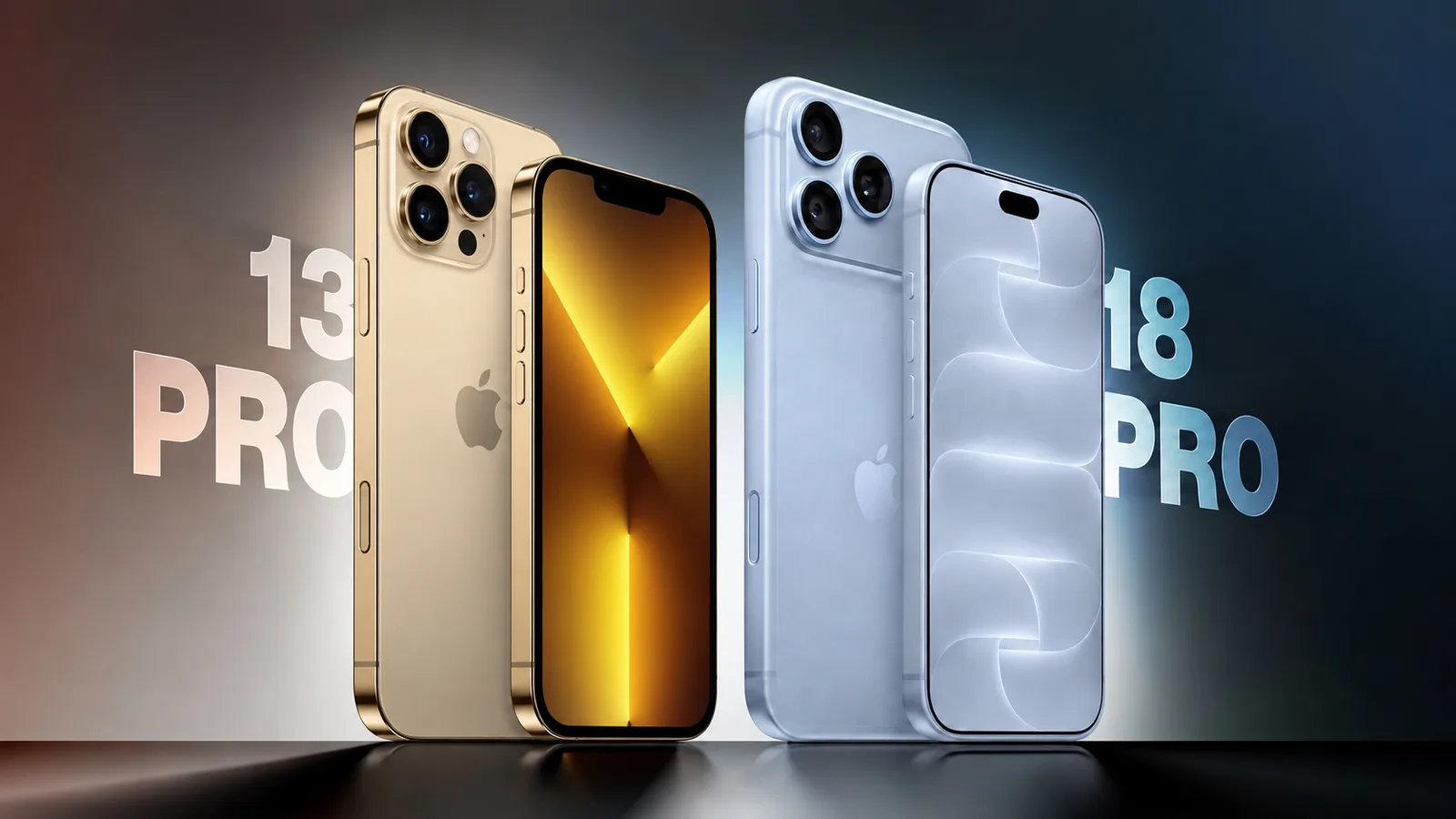
For iPhone 13 Pro owners, the iPhone 18 Pro represents five years of accumulated hardware and software changes. Apple’s newest Pro models offer major improvements in battery life, cameras, charging, connectivity, displays, and sustained performance, although they also cost more and are slightly larger and heavier.
The iPhone 18 Pro starts at $1,199 in the United States with 256GB of storage, while the iPhone 18 Pro Max starts at $1,299. The iPhone 13 Pro launched at $999 with 128GB, but Apple no longer sells it, so remaining buyers must look to used or refurbished devices.
What has changed since the iPhone 13 Pro?
The iPhone 13 Pro introduced ProMotion, macro photography, a 3x Telephoto camera, and stronger battery life than its predecessor. Since then, Apple has added the Dynamic Island, Always-On display, a 48-megapixel Main camera, satellite communications, the Action button, USB-C, Camera Control, and larger displays across successive generations.
The iPhone 18 Pro continues that progression with a smaller Dynamic Island, Ceramic Shield 2, an anti-reflective display coating, and outdoor brightness of up to 3,000 nits. The standard Pro display grows from 6.1 inches to 6.3 inches, while the Pro Max increases from 6.7 inches to 6.9 inches.
The newer models use an aluminum unibody rather than the iPhone 13 Pro’s stainless steel frame. They are also thicker and slightly heavier. The iPhone 18 Pro weighs 211 grams compared with 204 grams for the iPhone 13 Pro, while the Pro Max weighs 249 grams versus 240 grams for the older model.
Camera and video improvements
Photography is one of the clearest reasons to upgrade. The iPhone 18 Pro replaces the iPhone 13 Pro’s three 12-megapixel rear cameras with 48-megapixel Fusion Main, Ultra Wide, and Telephoto cameras. Its Main camera also has a variable aperture, with manual control available in Apple’s Camera app and supported third-party apps.
The Telephoto camera moves from 3x optical zoom to 4x, while the newer system offers an optical-quality 8x option and up to 40x digital zoom. Macro photography reaches 48 megapixels, and the front camera increases from 12 to 18 megapixels with autofocus and Center Stage framing.
Video creators gain support for rear-camera 4K Dolby Vision recording at up to 120 frames per second, ProRes recording at up to 4K and 120fps with external storage, Apple Log 2, ProRes RAW, and direct recording to external storage over USB-C.
Battery life, performance, and connectivity
Battery improvements may be especially noticeable on an older iPhone 13 Pro whose battery has aged. Apple rates the iPhone 18 Pro for up to 36 hours of video playback, compared with 22 hours for the iPhone 13 Pro. The Pro Max figures are 45 hours and 28 hours, respectively.
The iPhone 18 Pro charges to 50% in around 15 minutes with a compatible 60W adapter or higher, compared with around 30 minutes for the iPhone 13 Pro using a 20W adapter or higher. MagSafe charging also rises from 15W to 25W. USB-C replaces Lightning, with USB 3 transfer speeds and DisplayPort video output.
Apple’s A20 Pro chip, 2nm manufacturing process, seven-core GPU, and vapor chamber cooling should provide stronger sustained performance than the A15 Bionic. The newer phone also supports Wi-Fi 7, Bluetooth 6, Apple Intelligence, and satellite messaging features that are not available on the iPhone 13 Pro.
Is upgrading worth it?
For most iPhone 13 Pro owners ready to replace their phone, the iPhone 18 Pro is a substantial upgrade. The biggest everyday gains are longer battery life, faster charging, USB-C, brighter displays, and a more capable camera system. Gamers, video creators, and users who rely on demanding apps also benefit from the newer chip and improved cooling.
The iPhone 13 Pro remains usable and supports iOS 27, so owners who are satisfied with its battery and cameras can extend its life with a battery replacement. However, buyers who are prepared to purchase now will find that five generations of improvements make the iPhone 18 Pro easy to justify, provided they accept the higher price, greater thickness, and move to eSIM for U.S. models.


