By
By 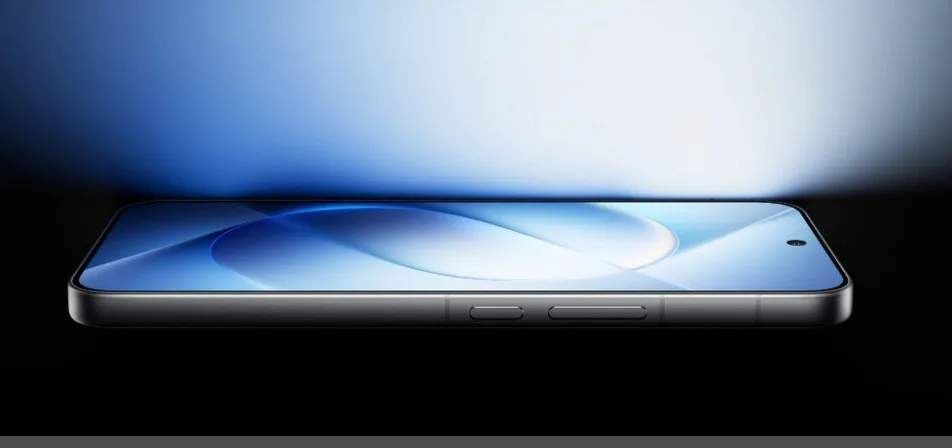
Samsung Display has revealed technical details of its newest and brightest smartphone OLED panel, an LTPO screen that will make its first appearance on the upcoming iQOO 16. The company says the display uses its M16 luminescent material and delivers a range of efficiency and image-quality gains over earlier generations.
How bright is the M16 OLED?
The headline figure is a claimed 10,000 nits of peak local brightness, which Samsung describes as industry-topping. That number applies only to a small, isolated area of the screen for short bursts, typically lasting from a few seconds to a few minutes. The more practical measure, global peak brightness across the entire panel, is rated at 2,800 nits.
The panel is built on what Samsung calls its LEAD 2.0 display technology, which the company says brings improved color accuracy and better power efficiency compared with previous iterations. According to Samsung, the M16 panel consumes up to 30% less power than its M14 panels.
Less flicker and other refinements
Alongside the brightness and efficiency claims, Samsung highlighted a reduction in flicker. The panel uses 3,300Hz pulse-width modulation (PWM) dimming, a higher frequency that can help reduce eye strain for users sensitive to screen flicker at low brightness levels.
The screen also incorporates Samsung's anti-reflective coating and a polarizer-free design known as on-cell film. This approach embeds the RGB color filters directly over the OLED material, a change that can improve brightness efficiency and reduce panel thickness.
iQOO 16 display specifications
The version heading to the iQOO 16 carries a detailed spec sheet:
- WQHD resolution of 2,560 x 1,440 pixels
- Variable refresh rate ranging from 1Hz to 165Hz
- 5,000Hz touch sampling rate
- Anti-reflective coating and polarizer-free on-cell film design
The high touch sampling rate and 165Hz refresh ceiling point toward gaming and high-performance use, which fits iQOO's positioning as a performance-focused brand.
Where else the M16 material appears
Samsung's M16 luminescent material is not exclusive to the iQOO 16. The company noted that the same material is used in Apple's iPhone 18 Pro series and the so-called iPhone Duo. Samsung's own Galaxy S27 Pro and Ultra models are also expected to adopt M16 OLED panels.
That spread underlines Samsung Display's role as a components supplier across competing brands. While the 10,000-nit local peak is a marketing milestone tied specifically to the iQOO 16 configuration, the underlying material improvements in efficiency and flicker reduction stand to benefit a wide range of flagship phones over the coming product cycles.
For buyers, the more meaningful takeaways are the 2,800-nit full-screen peak brightness, which affects real-world outdoor visibility, and the promised power savings that could translate into better battery life. The peak local brightness figure, while striking, applies only to small highlights and brief moments rather than everyday use.