By
By 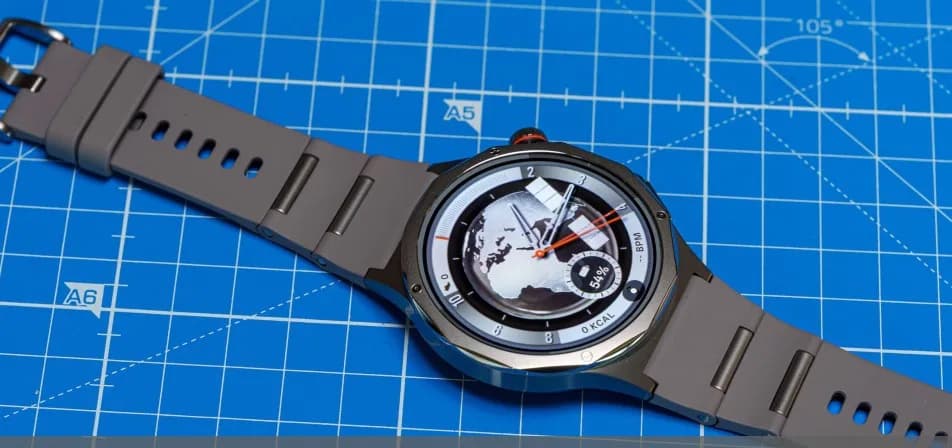
The Oppo Watch X3 is a Wear OS 6 smartwatch that targets the biggest weakness of the platform: battery life. Priced at around €300, it promises up to five days on a charge in full smart mode, thanks to a dual-chip design that switches between performance and efficiency silicon.
Design and build
The Watch X3 uses a titanium alloy chassis with a sapphire crystal front, weighing 43g without the strap and measuring 11mm thick. It comes in two colorways, Misty Titanium and Obsidian Black, with the Misty Titanium version adding 12 facets cut into the bezel to represent the hours of the day. After more than a month of use, the review unit showed no scratches on the glass or body.
The underside is made of glass-fiber-reinforced plastic rather than metal, a minor step down from the otherwise premium materials. The watch is rated IP68/IP69 and 5ATM for water resistance and has passed 16 MIL-STD-810H durability tests. It works with standard 22mm straps, though Oppo currently offers no official replacement bands—an odd omission given the extra straps sold with other versions of the watch.
Hardware and battery life
The 1.5-inch LTPO AMOLED display runs at 466x466 pixels and reaches a peak of 1,500 nits outdoors, or up to 3,000 nits in sports modes under direct sun. A "Splash Touch" feature keeps the touchscreen usable when wet.
The standout feature is the dual-chip architecture. A Qualcomm Snapdragon W5 Gen 1 handles the main Wear OS environment and apps, while an ultra-low-power BES2800BP chip manages background monitoring. This lets the watch offer a full Smart Mode and a Power Saver Mode that trades features for endurance.
Oppo claims up to five days in Smart Mode with typical use. In testing with the always-on display running 15 hours a day, the Watch X3 lasted four days; with the AOD off, it reached 5.5 days. Power Saver Mode, which relies solely on the low-power chip, extended battery life to 15 days. The 646mAh battery charges via a 10W magnetic puck—reaching 48% in 15 minutes and full in under an hour—but there is no wireless charging, and an Oppo SuperVOOC charger is needed for top speeds.
Software and health tracking
Running Wear OS 6, the watch offers Google Maps, Google Wallet and Google Gemini, with custom Gemini actions available as one-touch home-screen tiles. Owners of Oppo phones on ColorOS 15 or higher gain extras like remote camera control. As a Wear OS device, however, it does not work with iPhones, and Wear OS still lacks many smart home, airline, transit and ride-hailing apps.
Health features run through Oppo's Tri-Sense sensor and the OHealth app. The watch offers ECG, a 60-second Wellness Overview, fall detection with SOS, and Mind and Body stress tracking, plus over 100 sports modes with advanced metrics for 11 activities. Sleep tracking is a weak spot, missing metrics such as HRV and SpO2 during sleep that rivals provide, and the companion app is described as functional but bare-bones.
Verdict
The Watch X3 succeeds at delivering multi-day battery life while keeping the Wear OS experience intact. Its main obstacle is the OnePlus Watch 4, which shares the same core hardware but often sells for under €240, making the Oppo's titanium bevels and Dynamic-Link strap a matter of aesthetics and price. Other alternatives include the pricier Samsung Galaxy Watch Ultra2 and the similarly specced Xiaomi Watch 5. For buyers who value the titanium look and long battery life, the Watch X3 is a compelling if premium-priced choice.