By
By 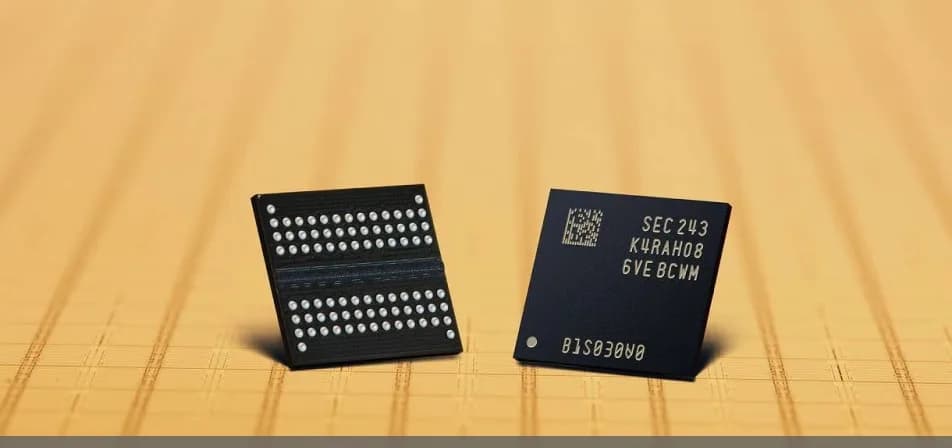
Samsung's semiconductor division reportedly plans to raise the prices of DRAM and NAND flash memory it supplies to smartphone makers by between 7% and 10%. According to Korean outlet Sisa Journal e, the company's Device Solutions (DS) unit is already negotiating higher prices, a move that could push up the cost of building phones across the industry.
Chinese brands first, Apple in Q4
The report says Chinese smartphone makers are at the front of the line, with talks already underway. Apple is expected to be brought back to the negotiating table in the fourth quarter of 2026. Notably, even Samsung's own mobile business will not be exempt, since the company's DS and Device eXperience (DX) divisions operate as separate units.
Apple may prove a difficult counterpart. Analysts cited in the report estimate that Apple buys roughly twice as much NAND for its phones as Samsung does, and about three times as much as Xiaomi. That scale gives the iPhone maker considerable leverage in any price discussion.
Why memory prices are climbing
The pressure stems from where the biggest profits now sit. Samsung, along with rivals SK Hynix and Micron, is earning strong margins on high-value memory such as High Bandwidth Memory (HBM) and server DRAM, driven by demand from AI and data center customers. As a result, memory fabs are steering capacity toward those high-performance products rather than the LPDDR chips that smartphones rely on.
That imbalance has tightened supply for mobile memory and helped drive prices sharply higher. Market research firm Omdia reports that DRAM and NAND prices have surged since last year and are expected to keep rising, though at a slower rate going forward. The firm predicts prices will stay elevated through at least the first half of 2027.
What it costs to fill a phone
Omdia's figures illustrate how quickly the raw memory bill for a phone has grown. These numbers reflect only the cost of the RAM and storage components, not the finished device.
- 8GB/256GB: around $35 in Q3 2025, rising to $109 in Q1 2026, $132 in Q2 2026, with estimates of $140 in Q3 2026 and $144 in Q4 2026.
- 12GB/512GB: around $60 in Q3 2025, with estimates of $202 in Q3 2026 and $206 in Q4 2026.
The trajectory suggests the memory alone in a well-specced flagship could cost several times what it did just a year earlier.
Why it matters
Memory is one of the most significant components in a phone's bill of materials, so sustained price increases put manufacturers in a tough spot. They can either absorb the added cost and accept thinner margins, or pass it on to buyers through higher retail prices or reduced storage in entry models. With Omdia expecting elevated pricing to persist into 2027, shoppers may see the effects reflected in upcoming device launches, particularly among Chinese brands that are first to feel the squeeze.