By
By 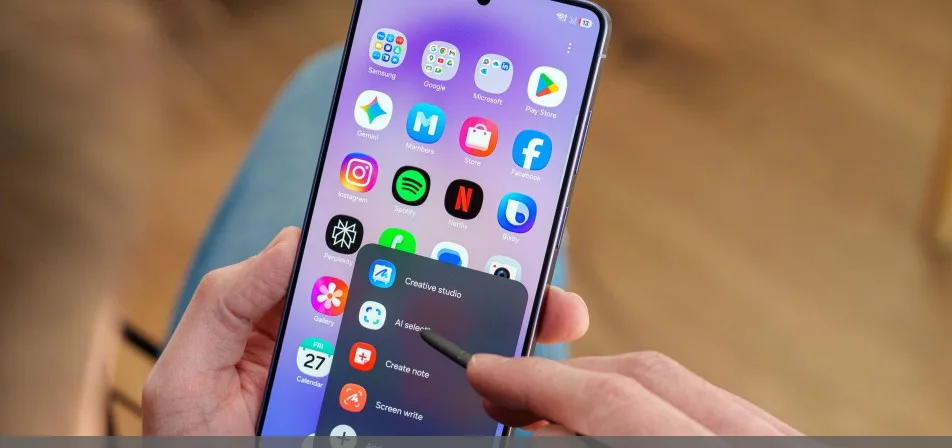
Samsung is reportedly planning a major overhaul of One UI 10, with changes that could affect how Galaxy users navigate apps, complete tasks and move between devices. The software is expected to represent a broader shift in Samsung’s design philosophy rather than another incremental visual update.
The claims come from a source cited by Nokia Power User and were partly supported by Samsung-focused tipster Ice Universe. In a post dated October 17, Ice Universe said an independent source had confirmed that One UI 10 would bring “significant changes” that were unprecedented in nature.
A move beyond separate app experiences
One of the reported changes involves replacing the traditional app-by-app approach with what the source calls Contextual Flow. Instead of making users open several applications to complete a basic task, One UI 10 could bring related information together in one view.
That approach could combine elements such as calendar appointments, location information and communications based on the situation. The concept resembles Samsung’s existing Now Nudge feature, but the report describes a substantially broader implementation that would connect information more organically across the operating system.
The goal would be to make the user’s objective, rather than an individual app, the centre of the experience. However, the report does not provide specific examples of how Samsung would implement the system or which devices would support every feature.
Fewer taps and stronger Galaxy connections
Samsung is also reportedly aiming to reduce what it describes as “cognitive load.” In practice, that could mean removing unnecessary taps, hidden menus and extra layers that make common tasks harder to find. The intended result is a more direct interface with fewer dead ends.
A third focus is a more unified ecosystem. One UI 10 is expected to improve handoffs between Galaxy phones, tablets and wearables, potentially making it easier to continue activities across devices. The available information does not specify which existing cross-device features would change.
Advanced AI features could follow a paid model
Artificial intelligence is expected to remain part of Samsung’s strategy, but the report suggests the company is considering a two-tier approach. Everyday functions would remain free, while specialised third-party integrations and more demanding processing tools could require a subscription.
Such a model would reflect the cost of running advanced AI, particularly as Samsung balances on-device computing with hybrid processing. The report presents this as a possibility rather than a confirmed pricing plan, and Samsung has not been cited as announcing the structure.
One UI 10 release timing remains uncertain
The scale of the reported changes could make One UI 10 difficult to complete for the next Galaxy Z Fold and Galaxy Z Flip generations. According to the report, Samsung may instead align the major release with the Galaxy S29 series, which would coincide with the tenth anniversary of One UI.
Samsung is also expected to provide developer previews well before the final release if the plans proceed. The report advises against delaying a hardware purchase solely to wait for One UI 10, saying the company’s long-term software support should bring the new features to recent Galaxy S and foldable Z flagships.