By
By 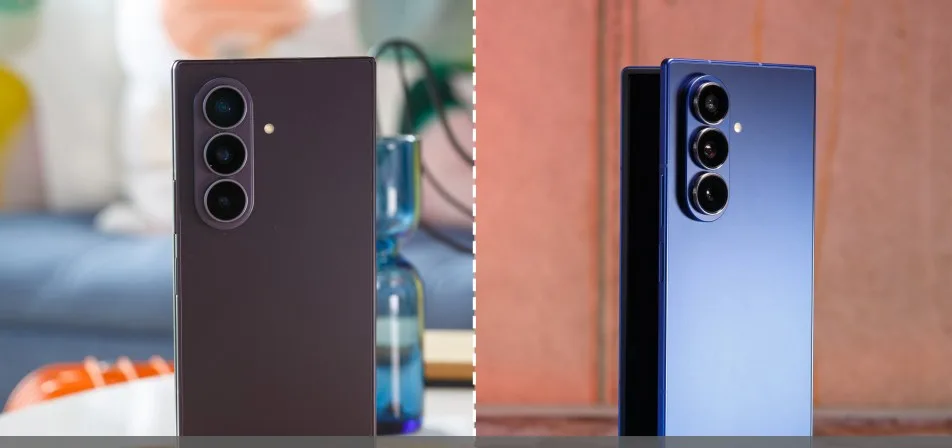
Samsung’s Galaxy Z Fold8 Ultra refines the company’s established book-style foldable rather than introducing a radically different design. Compared with the Galaxy Z Fold7, the newer model brings a larger battery, faster charging, a higher-resolution inner display and a newer Snapdragon processor. Yet the two phones remain remarkably similar in size, cameras and everyday software experience, making the older model a compelling alternative if it is available at a lower price.
Design and displays
The Galaxy Z Fold8 Ultra and Galaxy Z Fold7 have nearly identical physical dimensions and weigh the same. The newer phone is technically a little thinner, but the difference is unlikely to be noticeable in daily use.
Samsung has added another flexible titanium-alloy sheet within the Fold8 Ultra’s inner display. The company calls the overall construction “Flex Titanium” and says it improves durability, reduces the visible crease and permits a thinner display assembly. The crease remains clearly visible, but the revised hinge is easier to begin opening. Samsung has also adjusted the display tension and magnetic force to make the opening action feel smoother.
Both phones retain an 8-inch, 120Hz LTPO OLED inner screen, but the Fold8 Ultra raises the resolution from 1968 by 2184 pixels to 2256 by 2504 pixels. Its anti-reflective coating also improves outdoor readability. The 6.5-inch, 120Hz cover display remains effectively unchanged, and neither model supports Dolby Vision.
Battery and charging
Battery capacity is one of the clearest upgrades. The Fold8 Ultra uses a 5,000mAh battery, compared with 4,400mAh in the Fold7. Testing found improvements in overall active use, web browsing and video streaming, including when using the cover screen.
Charging is faster too. Wired charging rises from 25W to 45W through Power Delivery with the appropriate PPS profile, while wireless charging increases from 15W to 20W. The newer phone completes a full charge roughly half an hour sooner, making it more convenient for users who frequently need to top up.
Performance, cameras and software
The Fold8 Ultra moves from the Snapdragon 8 Elite used in the Fold7 to the newer Snapdragon 8 Elite Gen 5. Benchmark results show higher peak performance, although the advantage is less pronounced in broader tests. Both phones can throttle substantially during sustained workloads, and the Fold7 sometimes retains more of its performance under extended load.
Memory and storage options are broadly the same: 12GB of RAM as standard, some higher-end configurations with 16GB, and storage ranging from 256GB to 1TB. The newer model adds Bluetooth 6.0, while the Fold7 has Bluetooth 5.4.
The camera hardware is also familiar. Both phones use a 200MP main camera, a 3x telephoto and two 10MP selfie cameras. The Fold8 Ultra replaces the Fold7’s 12MP ultrawide sensor with a 50MP Tetrapixel sensor. In practice, daylight results are close, though the newer phone can produce slightly sharper main-camera images and somewhat better ultrawide shots in low light. The Fold7 can be more consistent in some night scenes.
The Fold8 Ultra launches with One UI 9 based on Android 17, while the Fold7 is expected to receive the same software version. Both phones have Samsung’s seven-year support commitment, although the newer device has an additional year of remaining support because it launched later.
Which Galaxy Z Fold should you buy?
The Galaxy Z Fold8 Ultra is the stronger choice for buyers who value battery life, charging speed, outdoor screen visibility and maximum performance. Its display construction and easier hinge action are useful refinements, even if they do not transform the Fold experience.
The Galaxy Z Fold7 remains a sensible option when priced lower. It matches the newer phone in overall design, cover-screen experience, storage flexibility and much of the camera performance. Its speakers may even sound cleaner and louder. Unless the Fold8 Ultra’s battery and charging upgrades are priorities, the Fold7 can provide most of the same flagship foldable experience for less.