By
By 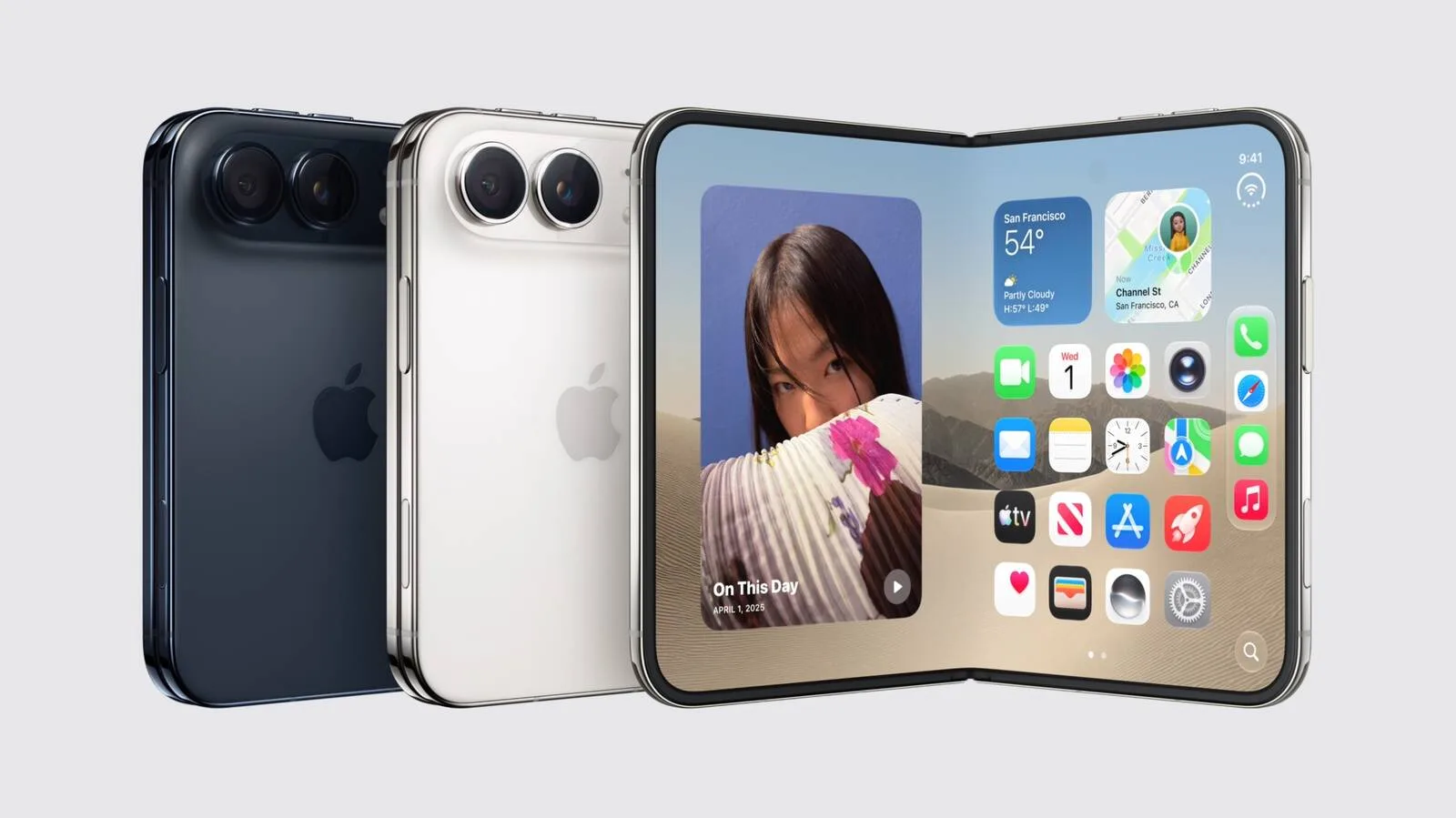
Apple's newly unveiled iPhone Duo, the company's first foldable iPhone, leaves out a number of features that are standard on the iPhone 18 Pro and iPhone 18 Pro Max, according to the specifications Apple has published for the devices. While the Duo introduces its own exclusive capabilities, such as a Duo FaceTime mode and upcoming Apple Pencil support, buyers weighing a switch from the Pro lineup will be giving up several camera, biometric, and control features.
Camera differences between iPhone Duo and iPhone 18 Pro
The most significant gap is in optical zoom. The iPhone 18 Pro and Pro Max include a dedicated Telephoto camera capable of up to 8x optical zoom, while the iPhone Duo relies on its 48-megapixel Fusion main camera to deliver what Apple describes as "optical-quality" 2x zoom rather than true telephoto reach.
The Duo's main camera also lacks the variable aperture found on the iPhone 18 Pro's Fusion camera, a feature that gives photographers and videographers finer control over depth of field. On the front, the iPhone Duo uses a 12-megapixel Center Stage camera, a step down from the 18-megapixel Center Stage front camera on the Pro models.
Several software-driven camera features tied to the Pro hardware are also absent from the Duo, including Pro controls within the Camera app, ProRAW, ProRes RAW, and spatial photo and video capture.
No Face ID or LiDAR on iPhone Duo
Perhaps the most notable omission for daily use is Face ID. Instead of Apple's facial recognition system, the iPhone Duo authenticates users through a Touch ID button, a design choice likely influenced by the constraints of the foldable form factor.
The Duo also does not include a LiDAR Scanner, the sensor Apple uses on Pro iPhones to measure depth for augmented reality applications. Additionally, the device lacks the Action button that has become a signature physical control on recent iPhone Pro models.
Why the trade-offs matter
These omissions suggest Apple prioritized the mechanics and durability of a folding display over matching every capability of its most advanced camera system and sensor array. Shoppers who depend on long-range zoom, Face ID convenience, or LiDAR-powered AR tools may find the iPhone 18 Pro a better fit, while those most interested in the novelty and flexibility of a foldable screen may be willing to accept fewer camera and biometric features.
Pricing and availability
Pre-orders for the iPhone 18 Pro and iPhone 18 Pro Max open Saturday, September 12, at 5 a.m. Pacific Time, with the phones launching Friday, September 18. The iPhone Duo follows on a separate schedule, with pre-orders beginning Friday, October 16, at 5 a.m. Pacific Time, ahead of its release on Friday, October 23.