By
By 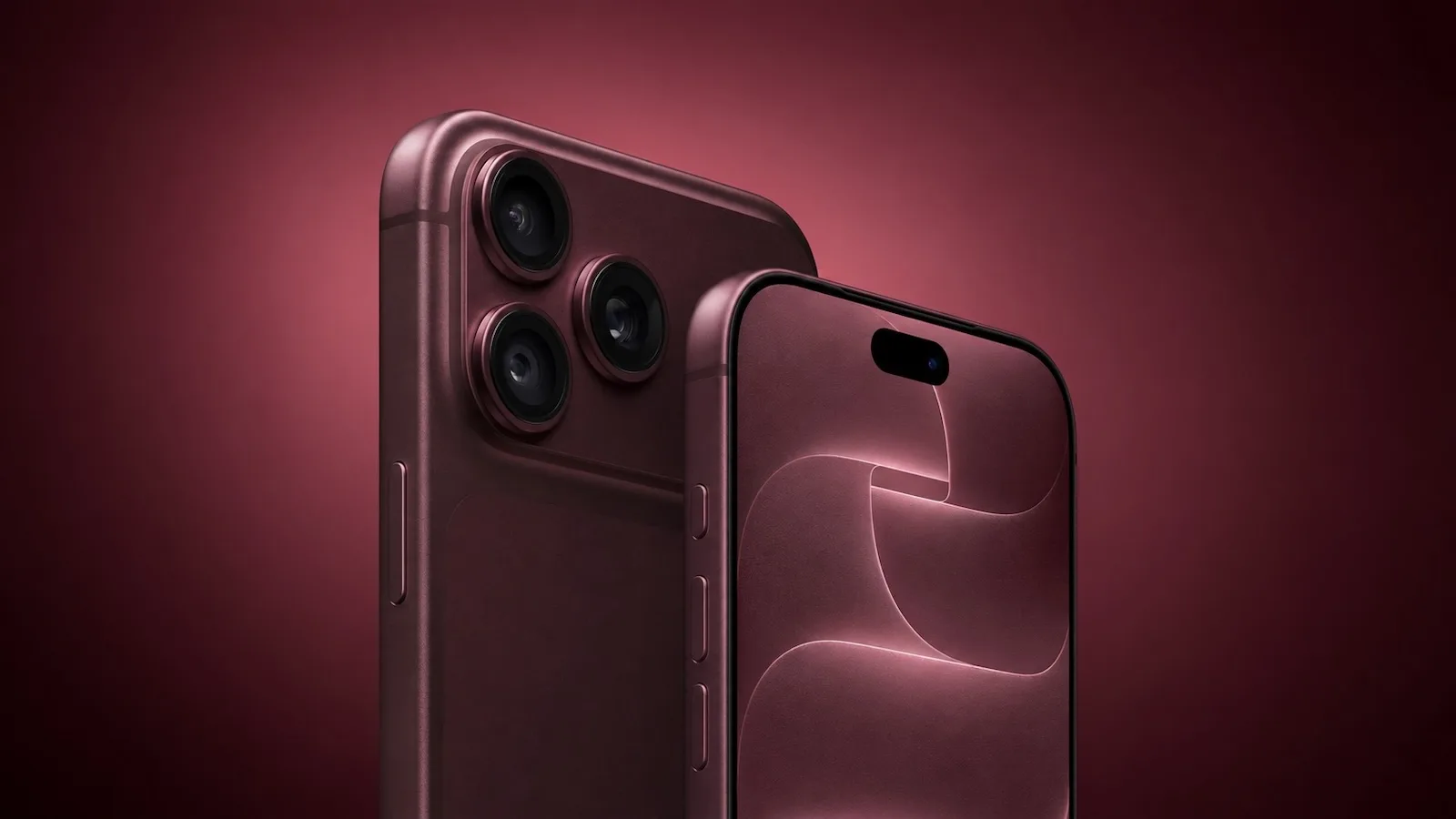
Apple's newly unveiled iPhone 18 Pro and iPhone 18 Pro Max sit as the most fully-featured traditional iPhones in the lineup, even though the new foldable iPhone Duo now tops the range. Both share a 48-megapixel Pro Fusion camera with a variable aperture, new manual Pro camera controls and the A20 Pro chip, leaving buyers to weigh a short list of differences.
What the two phones have in common
The iPhone 18 Pro and Pro Max use the same OLED Super Retina XDR display with ProMotion, an always-on mode and the Dynamic Island. They also share 5G connectivity, the A20 Pro chip, the same four color choices and identical camera hardware. For the first time, the smaller Pro model is offered with up to 2TB of storage, matching the storage tiers available on the Pro Max.
Size, weight and battery life
The clearest split is physical. The iPhone 18 Pro has a 6.3-inch display, measures 5.91 inches tall and weighs 7.44 ounces (211 grams). The Pro Max steps up to a 6.9-inch display, stands 6.43 inches tall and weighs 8.78 ounces (249 grams), making it the heaviest Pro Max Apple has released. Both are 0.34 inches (8.75 mm) thick.
Battery capacity favors the larger phone. According to European energy labels for models with a SIM tray, the iPhone 18 Pro carries a 4,056 mAh cell while the Pro Max uses 5,391 mAh. Apple does not publish battery capacities directly, and eSIM-only versions—including all U.S. models—have slightly larger cells that the company has not disclosed.
The gap in rated endurance widened this year. Apple lists up to 36 hours of video playback on the Pro and up to 45 hours on the Pro Max. That nine-hour advantage grew from a six-hour lead in the previous generation, with the Pro Max gaining six hours over the iPhone 17 Pro Max and the Pro gaining three.
The modem difference U.S. buyers should note
Apple lists its own C2 modem in the iPhone 18 Pro in every country. The Pro Max only uses the C2 outside the United States; U.S. units instead carry a Qualcomm modem, which iOS code reportedly points to as the same Snapdragon X80 used in last year's iPhone 17 Pro models. Both radios support sub-6GHz and mmWave 5G, and Apple says the C2 is faster and more energy efficient than the C1X with AI-driven reliability improvements. A visible hint of the hardware split is in band support: the U.S. iPhone 18 Pro lists LTE Band 106, while the U.S. Pro Max does not.
Pricing across the storage tiers
The iPhone 18 Pro starts at $1,199 and the Pro Max at $1,299, both $100 more than their iPhone 17 Pro equivalents. The premium grows sharply higher up the ladder: a 1TB iPhone 18 Pro now costs $300 more than last year's 1TB model. Storage pricing runs $1,199/$1,399/$1,799/$2,399 for the Pro and $1,299/$1,499/$1,899/$2,499 for the Pro Max across 256GB, 512GB, 1TB and 2TB. The $100 premium holds at every tier, so the Pro Max never becomes proportionally pricier as capacity rises.
Which one to buy
Screen size remains the decisive factor. The Pro Max delivers the largest display and longest battery life in a traditional iPhone, but its size and weight will feel excessive to some. Because the smaller Pro no longer forces buyers to skip the top storage tier, it is a strong choice for anyone hesitant about a big phone. U.S. buyers who specifically want Apple's C2 modem can only get it in the smaller model. If size and price are not concerns, the Pro Max is unlikely to disappoint.