By
By 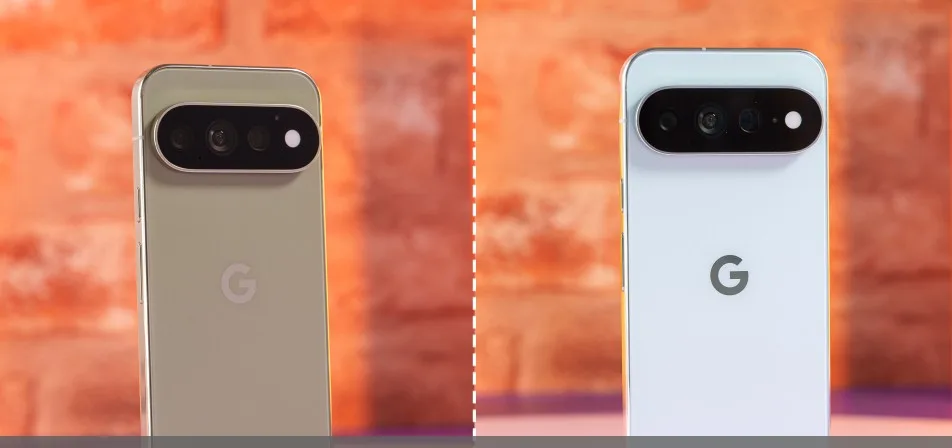
Google’s Pixel 11 Pro and Pixel 11 Pro XL share most of their hardware, but the larger model offers more than just a bigger screen. The Pixel 11 Pro XL has a larger battery, faster wired charging and better-sounding speakers, while the standard Pro is easier to handle and costs less.
The two phones are otherwise closely matched, with the same Tensor G6 processor, memory options, camera system and display features. The choice largely depends on whether the XL’s convenience upgrades justify its $180 premium in the US and €200 premium in Europe.
Size and display differences
The Pixel 11 Pro XL uses a 6.8-inch display, making it noticeably taller and wider than the standard Pixel 11 Pro. It is not thicker, but its larger footprint can make one-handed use difficult. The regular Pro is the more practical option for buyers who want a flagship that is easier to manage.
Despite the size difference, the standard model is not much lighter. Both phones use Gorilla Glass Victus 2 on the front and back, aluminum frames and an IP68 rating for dust and water resistance.
Screen technology is effectively the same on both models. Each supports HDR10+, a 120Hz refresh rate and a similar peak brightness. The decision here comes down to whether a larger viewing area matters more than compact handling.
Battery life and charging
The XL has the larger battery, at 5,115 mAh compared with 4,850 mAh in the Pixel 11 Pro. Testing found that this translated into a meaningful advantage mainly during web browsing. Results in the other three battery tests were similar, so the overall endurance gap is relatively small.
Charging is a clearer advantage for the XL. The regular Pixel 11 Pro supports wired charging at up to 30W through Power Delivery, while the XL reaches 45W. The larger model was substantially ahead after 15 and 30 minutes and reached a full charge 20 minutes sooner.
Both phones support 25W Qi2.2 magnetic wireless charging, so there is no difference when charging wirelessly.
Performance, cameras and speakers
Both models use Google’s Tensor G6 chip and offer the same storage configurations: 12GB of RAM with 256GB of storage, or 16GB of RAM with 512GB or 1TB. Benchmark results and stress testing showed no meaningful performance difference between them.
The camera hardware is also identical. Each phone has a 50MP main camera, a 50MP ultrawide camera and a 50MP telephoto camera with roughly 5x optical zoom, along with a 42MP ultrawide selfie camera. Daylight and low-light image quality were effectively the same, as were video capabilities, including 4K recording at 60 frames per second, 10-bit HDR and Google’s cloud-based 8K mode.
The XL does have an audio advantage. Although both phones reach similar loudness levels, the larger model’s speakers are tuned for fuller and clearer sound.
Which Pixel 11 model should you buy?
The Pixel 11 Pro is the better fit for buyers who prioritize a more manageable size and a lower price while wanting essentially the same performance and camera experience.
The Pixel 11 Pro XL makes more sense for users who want a large display, faster charging and slightly longer web-browsing endurance. Its improved speaker tuning adds another benefit, but the premium is hardest to justify if screen size and charging speed are not important.