By
By 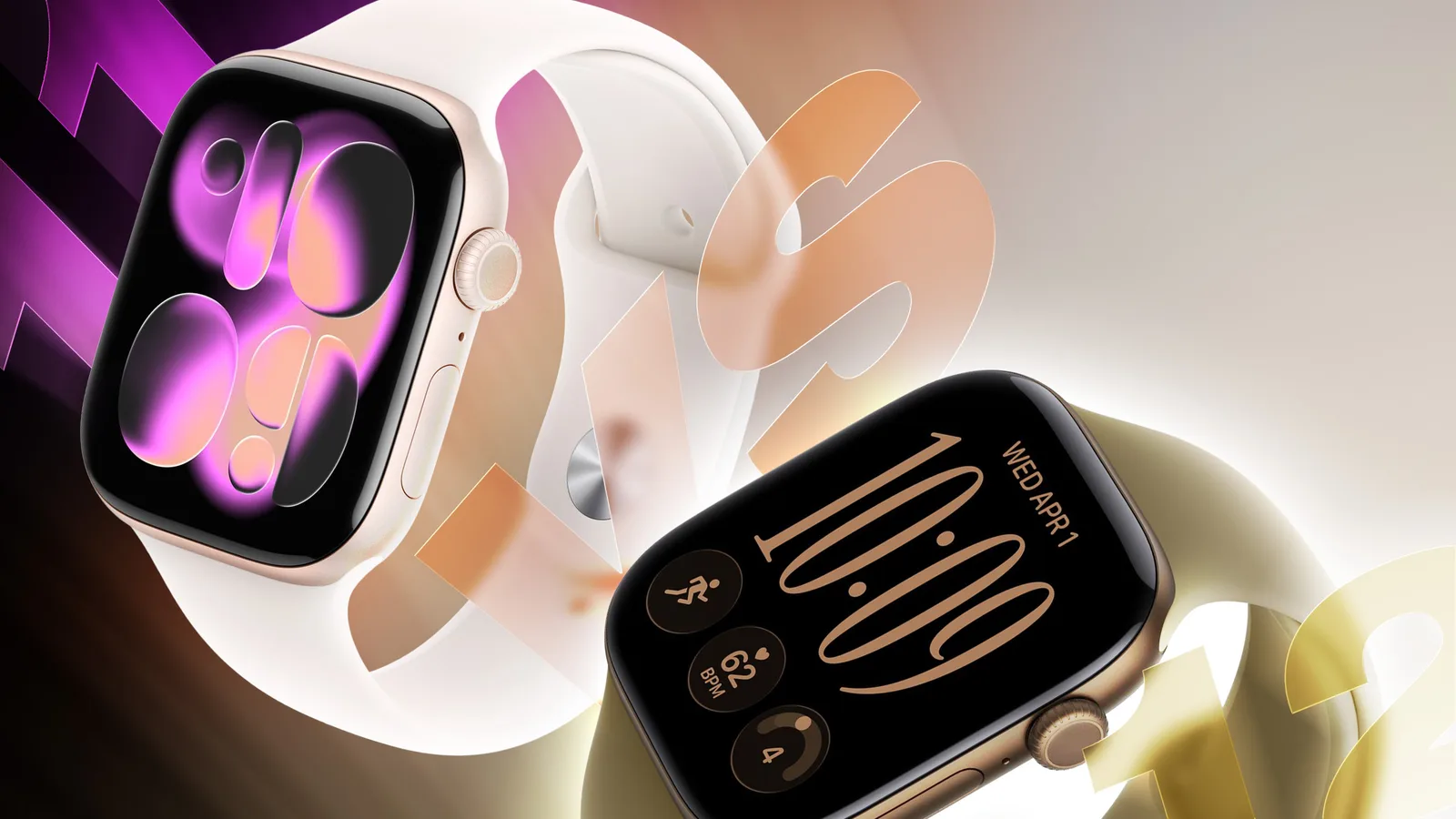
Apple has opened pre-orders for the Apple Watch Series 12, which goes on sale Friday, September 18, at the same $399 starting price as the now-discontinued Series 11. Unlike last year's modest update, the Series 12 delivers a lengthy list of changes, even though it keeps the same overall design for a third year running.
What's new in the Apple Watch Series 12
The headline upgrade is a redesigned Health Sensing System. Apple says it uses a larger electrode surface for better contact during ECG readings, redesigned photodiodes arranged in a ring, and bigger, more efficient green LEDs. The result is heart rate sampling every five seconds throughout the day, 60 times more often than before, and HRV measured up to 24 times more frequently. Apple claims this makes the Series 12 the most accurate heart rate sensor in any wearable.
That data powers several features exclusive to the new model. The Readiness app produces a daily score out of 10 based on activity, training load, vitals, and sleep, with guidance ranging from "Recover" to "Go For It." There is also a new Recovery HRV metric, a daytime vitals view, and complications for real-time heart rate and step count. Apple says a rebuilt pedometer makes step tracking the most accurate of any smartwatch.
A new chip and Audio Intelligence
The Series 12 is the first Apple Watch in two years to get a new processor. The S11 chip replaces the S10 that powered both the Series 10 and Series 11, and RAM doubles from 2GB to 4GB. That extra headroom should position the watch better for future Apple Intelligence features.
The S11 also enables Audio Intelligence, a set of features shared with the Ultra 4. Live Rewind shows a transcript of the last 15 seconds of conversation with a double press of the Digital Crown, Siri Recap summarizes conversations, Sound Recognition alerts deaf and hard of hearing users to sounds like sirens and doorbells, and Shazam can identify nearby music automatically. Apple says audio is processed in a hardware-isolated Secure Exclave and is never recorded.
Design, materials, and battery
The case gains a tougher Ceramic Shield 2 front on aluminum models, described as 60% tougher than the previous Ion-X glass. Apple has also reintroduced a ceramic case option, the first since the Series 5 Edition in 2019. The ceramic models are larger and heavier, reaching up to 52.9 grams in the 46mm Night Blue finish.
Even aluminum and titanium versions are now 1mm wider and roughly 2 grams heavier. The display area shrinks slightly despite unchanged resolution: the 46mm model drops about 2% to 1,196 sq mm, and the 42mm falls to 970 sq mm, which means marginally thicker borders.
Everyday battery life is unchanged at up to 24 hours, or 38 hours in Low Power Mode. The gains are elsewhere: workout endurance rises 25% to up to 10 hours outdoors, and 15 minutes of charging now delivers up to 12 hours of use rather than eight. Display brightness, 64GB storage, 5G connectivity, and water and dust resistance all carry over.
Is it worth upgrading?
For new buyers, the Series 12 is the clear pick at the same $399 price. For existing Series 11 owners, the case is more nuanced. Many core features are unchanged, and Siri AI is coming to the Series 11 anyway, so there is little general-purpose reason to upgrade. However, the continuous heart rate tracking, Recovery HRV, and Readiness are compelling for anyone focused on training and recovery, while Sound Recognition alone may justify the move for deaf and hard of hearing users.
Owners who can wait may hold out for the rumored "Series 13," which is expected to bring the first major redesign since the Series 10, including a new band attachment system. Upgrading is easier to justify from a Series 9 or older.