By
By 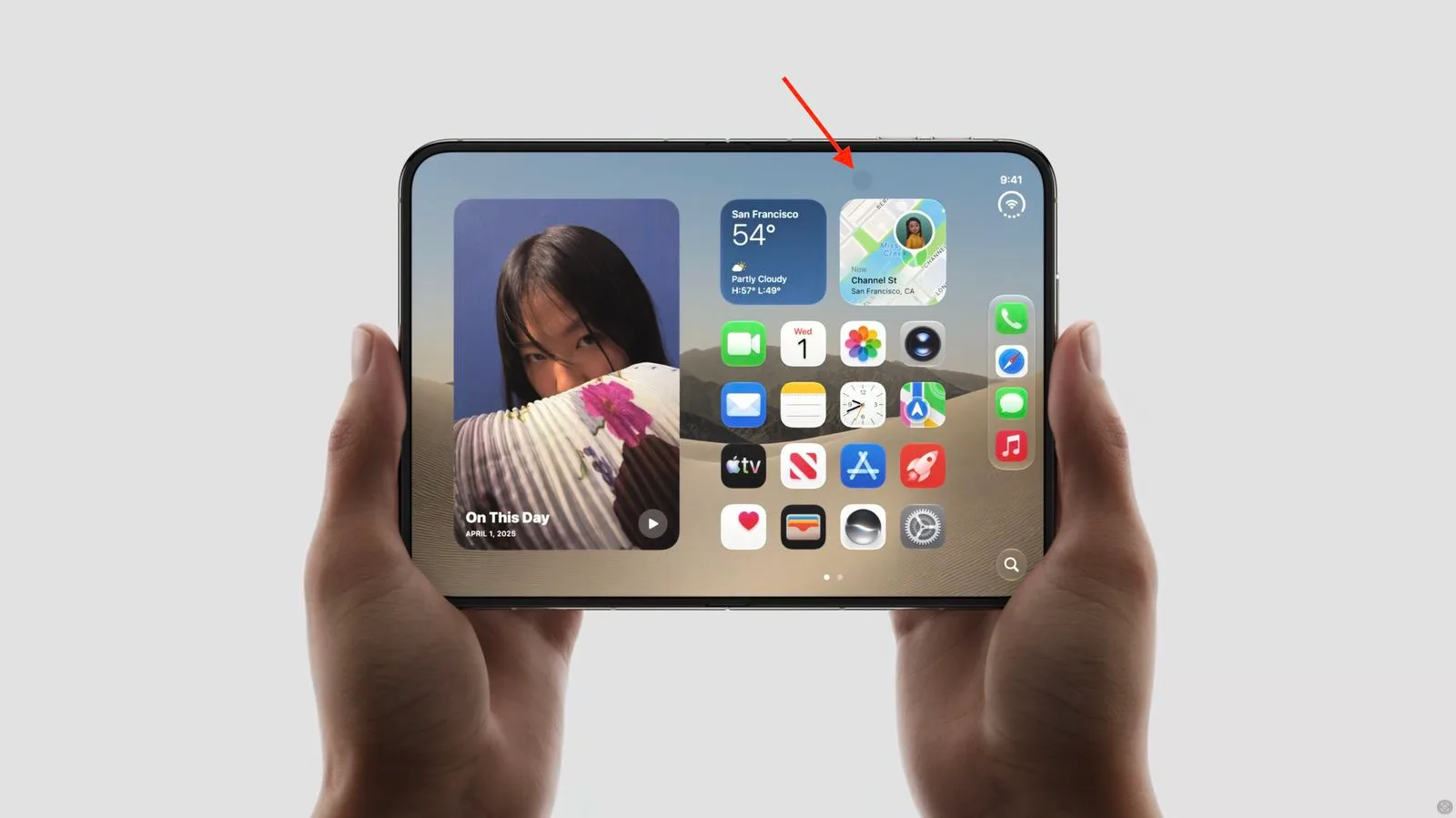
Apple's new foldable iPhone Duo includes an under-display FaceTime camera hidden beneath its 7.6-inch inner screen, marking the company's first use of this technology. But while Apple has published extensive specifications for the device's other cameras, it has notably omitted one key detail about the under-screen sensor: its megapixel count.
According to Apple's official tech specs page for the iPhone Duo, the under-display camera supports Center Stage for video calls, has an f/1.8 aperture, and records video at up to 1080p at 30 or 60 frames per second. It also includes features like Animoji and Memoji support, wide color capture for photos and Live Photos, lens correction, and Spatial Audio recording. Notably absent from this list is any mention of resolution, a figure Apple typically discloses for its other cameras.
What the Specs Suggest About Resolution
For comparison, Apple has confirmed that the iPhone Duo's outer front display houses a 12-megapixel camera, while two 48-megapixel lenses sit on the back of the device. The outer front camera can record 4K video at up to 60 fps, and the Main rear camera supports 4K at up to 120 fps. The under-display camera, by contrast, tops out at 1080p at 60 fps.
This limitation implies the sensor must be at least 2 megapixels, the minimum typically needed to shoot 1080p video. Its inability to capture 4K footage suggests the sensor is likely well below 8 megapixels, and given Apple's silence on the matter, the true figure may be closer to the 2-megapixel floor.
Compensating for Light Loss Through the Display
The under-screen camera's f/1.8 aperture is wider than the f/2.2 aperture on the outer front camera, a difference that likely helps offset the light lost as it passes through the display panel above the lens. Apple has not detailed how this trade-off affects actual image quality, and the full picture will likely only emerge once reviewers and buyers get hands-on time with the device.
A report from December 2023 indicated that LG Innotek was developing an under-display camera for Apple using a