 By
By 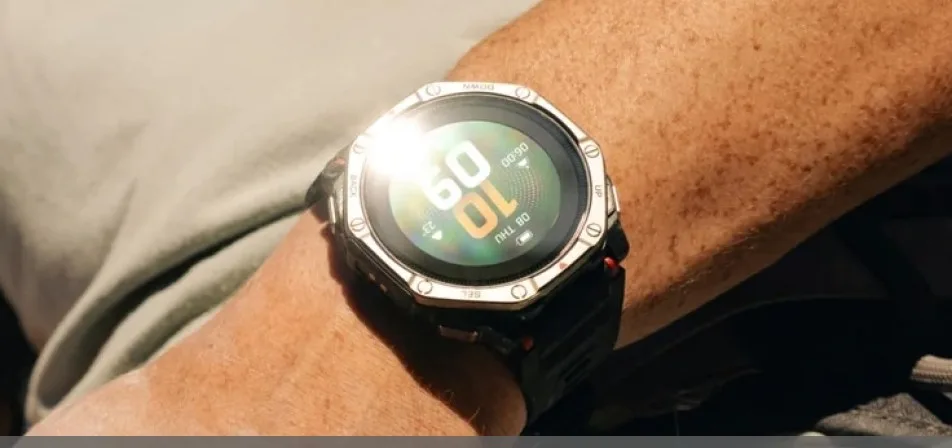
Amazfit has unveiled the T-Rex Dual Solar, a rugged smartwatch designed to extend battery life with solar panels on both sides of its case. The watch is rated for up to 21 days of typical use from its built-in 660mAh battery, but regular exposure to direct sunlight can push that figure substantially higher.
When worn on the wrist and exposed to three hours of direct sunlight per day, Amazfit says the T-Rex Dual Solar can reach 34 days of typical battery life. Using the larger solar panel on the rear with three hours of direct sunlight daily increases the claimed figure to 51 days.
How the T-Rex Dual Solar’s charging works
The dual-panel design gives the smartwatch two ways to collect solar energy. A panel on the front can receive light while the watch is being worn, while the larger rear panel is intended to gather more sunlight when the watch is positioned with its back exposed.
These battery figures are usage estimates rather than guarantees of continuous operation. Amazfit’s claims depend on the amount of direct sunlight the watch receives and whether it is worn or placed to expose the rear panel. The company’s standard typical-use estimate is 21 days without the stated solar exposure.
Display and durability features
The T-Rex Dual Solar has a 1.32-inch AMOLED display with a peak brightness of up to 3,000 nits. Sapphire Glass protects the screen, adding a scratch-resistant cover to the outdoor-focused design.
The smartwatch supports more than 180 workout modes and includes Bluetooth calling. It also has 10 ATM water resistance, allowing it to target users who want a watch for exercise and water-based activities. A built-in LED flashlight provides another practical feature for outdoor use.
Price and availability
Amazfit offers the T-Rex Dual Solar in a Basalt Black finish with a silicone strap. The smartwatch is priced at $650 in the United States, according to Amazfit’s product listing.
At that price, the dual solar system is the watch’s defining feature. The claimed 34-day figure applies to wearing it under three hours of direct sunlight each day, while the maximum 51-day estimate requires exposing the larger rear panel to the same daily sunlight duration.


