By
By 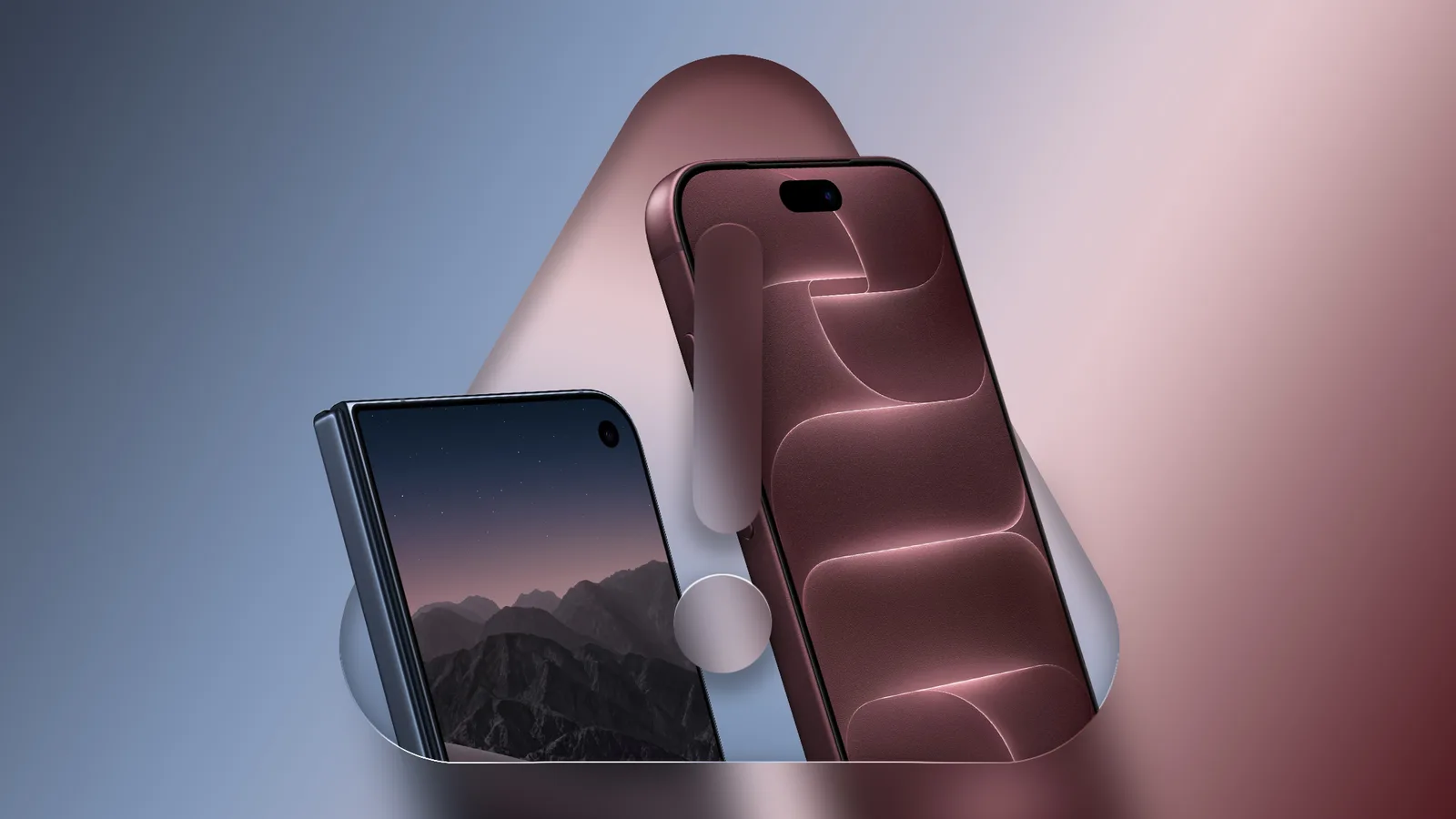
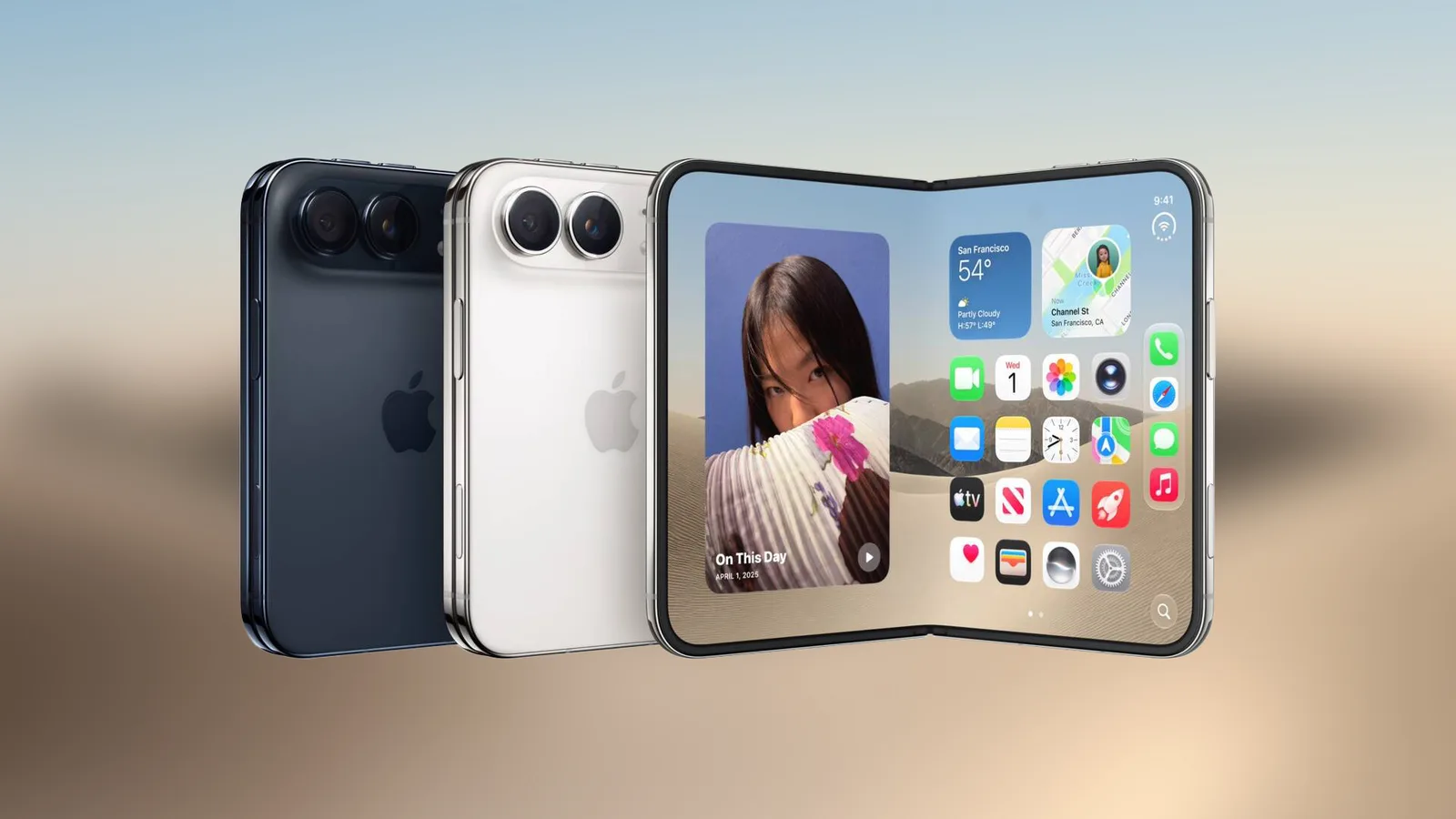
Apple’s $1,999 iPhone Duo offers a 7.6-inch folding display, but buyers give up a long list of features found on the iPhone 18 Pro and iPhone 18 Pro Max. The differences affect everyday controls, camera hardware, battery life, repairs, and professional recording tools.
At equivalent storage capacities, the iPhone Duo costs $800 more than the iPhone 18 Pro and $700 more than the Pro Max. Its main advantage is the foldable design: a 5.4-inch outer screen opens to provide a larger display for reading, video, document work, and side-by-side apps.
All three phones use the A20 Pro chip, support ProMotion refresh rates up to 120Hz, include a 48-megapixel Ultra Wide camera, and offer MagSafe and USB-C with USB 3 speeds. The foldable design, however, changes how the phone works and what it can do.
Everyday features the iPhone Duo lacks
The iPhone Duo replaces Face ID with Touch ID built into the side button. It also removes the customizable Action button, although Camera Control remains available. Buyers do not get a physical mute control or the Action button’s shortcuts for features such as the flashlight and Focus modes.
Apple lists MagSafe cases and chargers as compatible, but does not list wallet compatibility for the iPhone Duo. The phone is also eSIM-only worldwide, while some Pro models retain a physical nano-SIM slot in markets including the United Kingdom and Australia.
The outer display is smaller than either Pro model’s conventional screen, measuring 5.4 inches versus 6.3 inches on the iPhone 18 Pro and 6.9 inches on the Pro Max. The larger screen is available only after unfolding the phone, and its folding panel has a crease that can be visible in some lighting.
The Duo is wider, thicker, and heavier when closed. It measures 84.1mm wide and 11.3mm thick, and weighs 254 grams. Its battery is rated for up to 24 hours of typical use, matching the smaller Pro but falling below the Pro Max’s 30-hour rating.
Major camera and video trade-offs
The iPhone Duo does not include the Pro models’ dedicated 48-megapixel 4x Telephoto camera. Its longest optical-quality setting is a 2x crop from the Main camera, with digital photo zoom reaching 10x instead of 40x. Video zoom tops out at 6x rather than 24x.
The foldable also lacks a variable aperture, LiDAR Scanner, adaptive True Tone flash, and the Pro models’ complete manual camera controls. ProRAW, spatial photos and video, ProRes, ProRes RAW, Apple Log 2, ACES, and genlock are not available in its native camera feature set.
Its outer Center Stage camera has 12 megapixels and an f/2.2 aperture, compared with 18 megapixels and f/1.9 on the Pro models. The inner under-display camera is limited to 1080p video and does not support features such as Night mode, portrait photography, or Photographic Styles.
Higher long-term ownership costs
The foldable screen introduces additional repair considerations. Apple lists a $49 cover-layer replacement fee in the United States without AppleCare+ coverage, or $19 with coverage. Under AppleCare+, accidental damage to the inner display carries a $99 service fee, compared with $29 for screen-only damage on the Pro models.
Without AppleCare+, Apple estimates $999 for inner-display damage and $1,499 for other damage on the iPhone Duo. Its battery service fee is $229, compared with $129 for either Pro model. AppleCare+ with Theft and Loss also costs more, at $19.99 per month or $199.99 annually.
Who should consider the iPhone Duo?
The iPhone Duo makes the strongest case for buyers who will frequently use its inner display for reading, watching video, reviewing documents, or working across two apps. Buyers who mainly use a phone while it is closed may find the wider body, smaller outer screen, and missing features harder to justify.
People who rely on telephoto photography, ProRAW, ProRes, or longer battery life may be better served by the iPhone 18 Pro models. Pre-orders for the iPhone Duo open October 16, with availability beginning October 23.