By
By 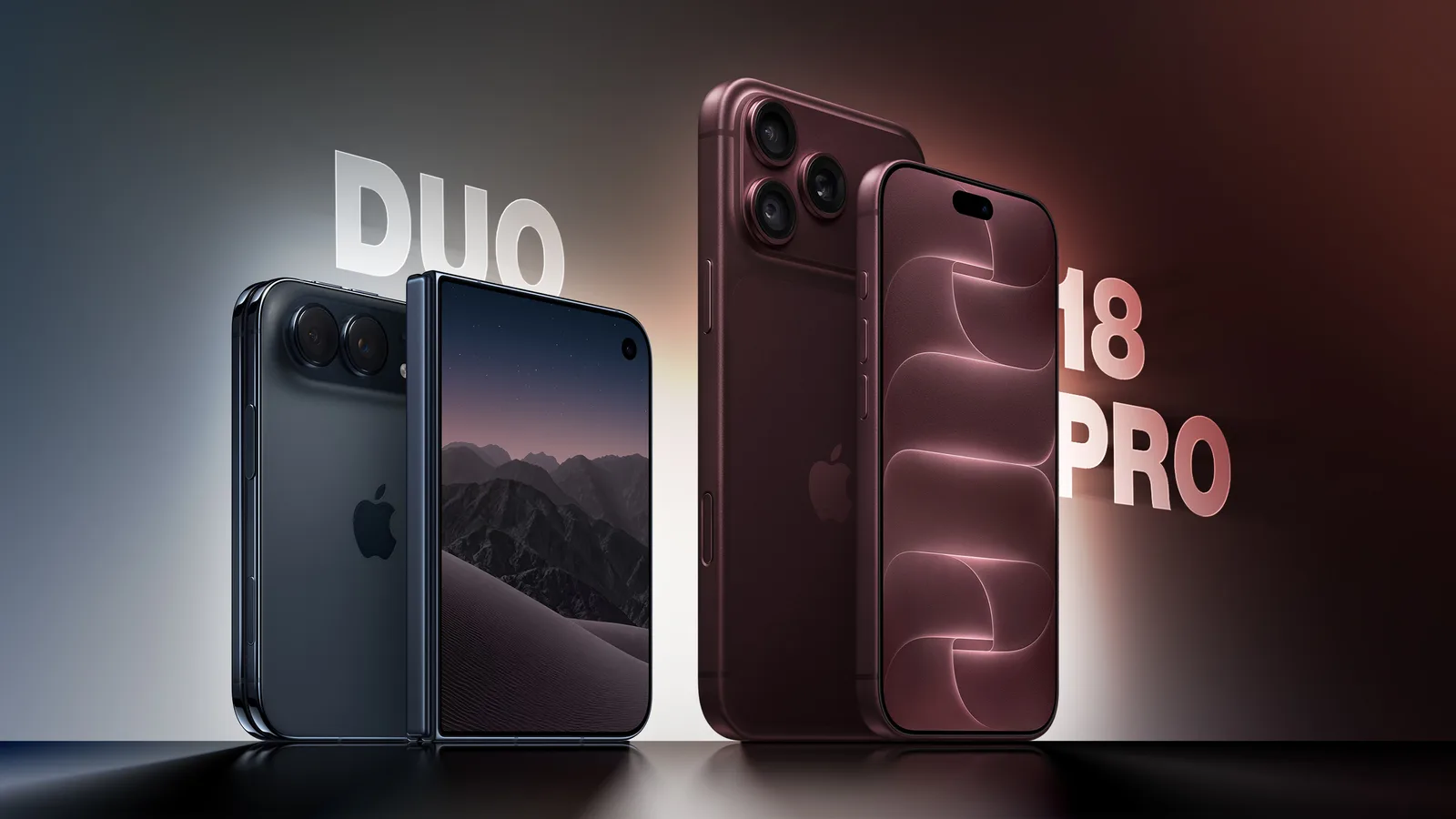
Apple’s new top-tier iPhone lineup gives buyers a choice between familiar Pro hardware and a new foldable design. The iPhone 18 Pro starts at $1,199, the iPhone 18 Pro Max starts at $1,299, and the first-generation iPhone Duo starts at $1,999. All three use Apple’s A20 Pro chip, but the Duo’s higher price primarily pays for its folding display rather than a more advanced camera system.
How the iPhone Duo differs from the Pro models
The iPhone Duo opens into a 7.6-inch display and has a 5.4-inch outer screen for use while closed. Its inner display supports Apple Pencil with USB-C, giving it an advantage for reading, documents, note-taking, and video. The iPhone 18 Pro has a 6.3-inch screen, while the Pro Max offers a 6.9-inch display.
That larger folding screen comes with physical compromises. The Duo is 0.44 inches thick when closed, weighs 8.96 ounces, and is wider than either Pro model in its closed configuration. It uses Touch ID in the side button instead of Face ID, omits the Action button, and is compatible with fewer MagSafe accessories than the Pro phones.
All three models include ProMotion displays with refresh rates up to 120Hz, Always-On functionality, Dynamic Island, USB-C, Wi-Fi 7, satellite safety features, and Apple Intelligence in iOS 27. The Duo also shares the same storage tiers, from 256GB through 2TB.
Why the iPhone 18 Pro has better cameras
The camera gap is the clearest reason to choose an iPhone 18 Pro. The Pro models use a 48-megapixel Pro Fusion camera system with a variable-aperture main camera and a dedicated 48-megapixel telephoto camera. They offer optical zoom options from 0.5x through 8x, a LiDAR scanner, adaptive True Tone flash, and four studio-quality microphones.
The Duo has a 48-megapixel Dual Fusion system with a fixed main-camera aperture and no dedicated telephoto camera. Its optical zoom range is limited to 0.5x, 1x, and 2x. It also lacks ProRAW, ProRes RAW, Apple Log 2, professional camera controls, spatial photo and video recording, and several other capture features found on the Pro models.
Those differences matter beyond professional filmmaking. The Pro models provide more flexibility for distant subjects, low-light compositions, depth-of-field control, and editing-heavy workflows. The Duo’s front cameras are also less capable, including a 12-megapixel outer camera and an under-display inner camera limited to 1080p video.
Battery life and pricing
The iPhone 18 Pro is rated for up to 24 hours of typical use, while the Pro Max reaches up to 30 hours. The Duo is rated for up to 24 hours, although its video playback figures vary significantly depending on whether the outer or inner display is used. The Pro models can reach a 50% charge in around 15 minutes, compared with approximately 20 minutes for the Duo.
At the same 256GB capacity, the Duo costs $700 more than the Pro Max and $800 more than the Pro. The premium remains substantial at higher storage levels.
Which iPhone should you buy?
For most buyers, the iPhone 18 Pro is the strongest choice because it combines the A20 Pro chip with the most versatile camera system at the lowest price among these models. The Pro Max is preferable for shoppers who want a larger conventional display and longer battery life.
The iPhone Duo makes sense for buyers who would regularly use its folding screen for reading, notes, documents, or watching video and are willing to accept its camera and design compromises. If that use case is not already clear, the Pro models offer better value and more capable hardware. iPhone 18 Pro and Pro Max pre-orders are open, while iPhone Duo pre-orders begin October 16 ahead of its October 23 release.